Like a Walk in the Park

Sentiero Italia. Or was it CAI #3? Or #10Bis?

Sentiero Italia. Or was it CAI #3? Or #10Bis?

As soon as I can I’m going to stop waking up at 4:00 in the morning. Although it’s nice to spend a little time over email and also to connect back home where it’s early evening, it’s tough to be awake, hungry, and have to wait four hours for breakfast.

Mirko, left, with John. Today's hiking buddies.

Mirko, left, with John. Today’s hiking buddies.

Such is the hard life of an Ordained Writer (formerly Ordained Minister). This morning I dutifully waited the four hours until breakfast and, when it finally, arrived, was not disappointed in the spread. Mueslix, toast, yogurt, coffee, orange juice, jam. Oddly, no Nutella®, but I’m not complaining. I settled in at the outside breakfast table, with my host, Alec, talking about hiking maps for the local area. Alec mentioned that another guest, John, was planning a day’s hike with a professional local guide and suggested I might want to consider joining them.

When John arrived he agreed, and the two of us set out for Gubbio where we were to meet our guide. John works in Italy for the U.S. State Department and is on a mini-vacation from his office in Rome. Once in Gubbio we met up with Mirko, our guide. Mirko is a local farmer who trained as a geologist, and to supplement his income he took up guiding. He’s also into spelunking, i.e. exploring caves, and he shared with us that the peak he chose to show us — protected in a nature park — has an old Italian name of Monte Cucco that possibly means “Hollow Mountain” due to the 30 km of caves inside.
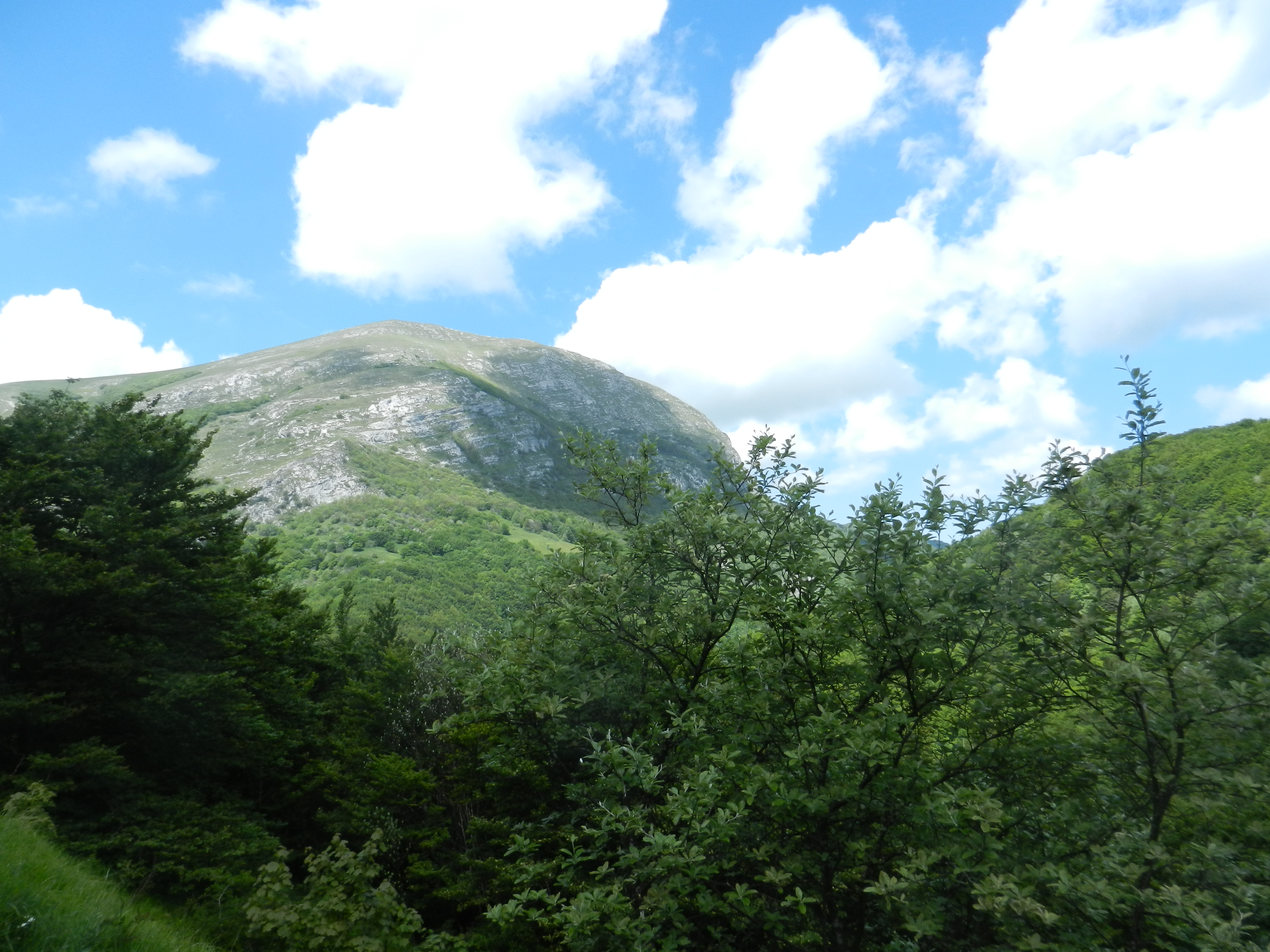
From here the mountain does not seem hollow.

From here the mountain does not seem unusually hollow.

We agreed to a 3-4 hour hike and set off on what turned out to be Sentiero Italia. This “Grand Italian Trail” covers 6,166 km as it snakes its way across, up and down the Italian peninsula plus Sicily. For folks from the Western U.S. it would be something like spending time on a portion of the Pacific Crest Trail. Walking on the “S1” gave me a chance to ask Mirko about Italian trail marking, a matter I’d been curious about since last year when I noticed a variety of markings on the Via di San Francesco. According to Mirko, all red and white striped trails are marked by the Club Alpino Italia and numbered by locals based on the trails’ destinations. The Sentiero Italia is the “Interstate Highway” of Italian trails, always marked with the red/white stripes and a black “S1” scrawled in the middle. Mirko described the difficulty of creating maps for the many Italian trails, given the large number and the fact that the trail system in Italy is maintained mostly by volunteers. As we branched off the S1 we walked along Trail #3, #17, and then #10 BIS. The latter is like “10 plus,” according to Mirko, because the trail numberers ran out of numbers and needed to find something between #10 and #11.

Mirko showing how to walk in a limestone creek bed. He also showed us how to fall down a short bank.

Mirko showing how to walk in a limestone creek bed. He also showed us how to fall down a short bank.

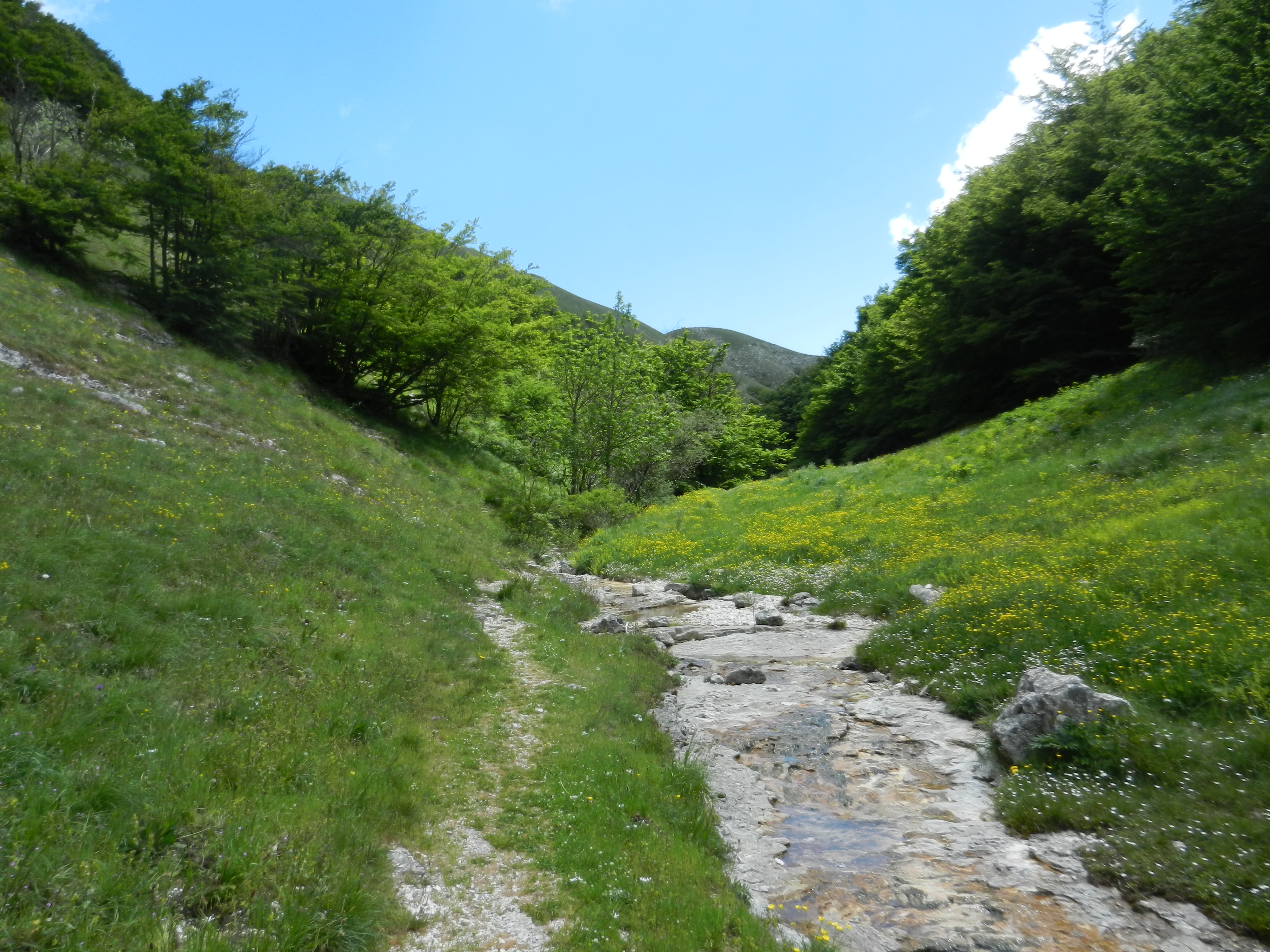
We walked through forests of beech, then along meadows filled with wildflowers. Mirko seemed to know them all. He mentioned to us that he’d recently identified 85 different varieties of orchids within this nature preserve. We walked along a limestone lined creek bed and enjoyed finding tiny worms and leeches in the clear water. Mirko assured us that we could drink the water since its purity was proven by the presence of the tiny squirming creatures. I politely demurred and instead sipped from my clear plastic disposable water bottle.

Mirko was a fine guide, but the economic difficulties of the region were apparent as he showed us the bottoms of his hiking boots. They were worn completely smooth by four years of hiking. I found myself wishing I could help him get a new pair and I worried, with good reason it turned out, that his boots would be slippery in the wrong conditions. Mirko was very earnest, and his geological background and love of plant life showed themselves as he described the sights along the way. Fortunately he wasn’t hurt when he slid a few feet down a damp bank, landing on his backside.

True to his word, the hike ended back at the trailhead in about 3 or 4 hours. Unlike trailheads back home, this Italian one was equipped with a fine restaurant. We enjoyed plates of tagliatelle ai funghi, a local specialty, before heading back to a challenging afternoon of sunbathing by the pool at the guest house. Later I will force myself to enjoy a barbecue and some local wines with the other guests, followed by a viewing of the evening’s promised meteor shower.
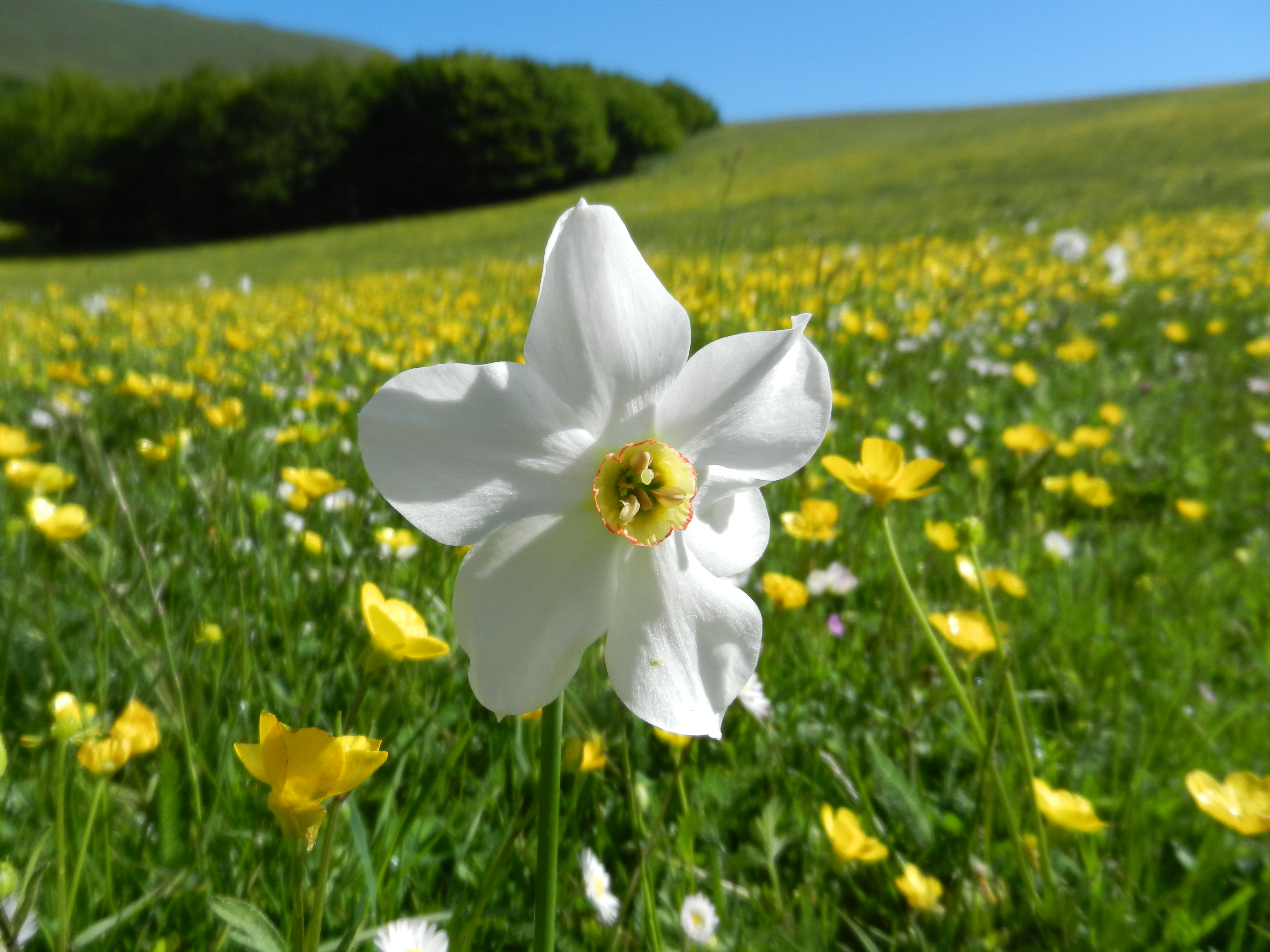
Narcissus. At least that's what Mirko said.

Narcissus. At least that’s what Mirko said.

Simple Task: Get to Perugia via Gubbio

May 23 & 24, 2014 — Rome to Gubbio

Yesterday’s taxi fiasco could have been averted by following the simple rule I learned in my first international trip: never agree to a taxi ride in an un-metered taxi without first negotiating the price. If only I’d followed another well-known rule of travel yesterday I would have saved a couple of hours of frustration. The rule? Never step onto a train without knowing for sure where it’s going.

These are on every breakfast table in Italy and each packet is the equivalent of eating two hazelnuts.

These are on every breakfast table in Italy and each packet is the equivalent of eating two hazelnuts!

The day started well and ended well. I awoke early in La Girandola Hotel B&B near the Termini Station in Rome and cruised the Web while waiting for breakfast to be served in the eating area outside my room. This allowed me to research the top cell companies in Italy to see where and how I could get a SIM card for my iPhone. I discovered the TIM company is Italy’s largest cell provider and they have a store right in Termini Station. I also reserved my train ticket to Perugia, where I will get to the airport and pick up a rental car for a ride to the guest house where I’ll relax for a few days before language classes. I also bought my train ticket online — Rome to Foligno to Perugia. Simple.

Breakfast time finally arrived (8:00 a.m. seems late when you wake up at 4:00 a.m.). “Ahh, yes,” I said to myself as I scanned the breakfast table. “Nutella®. I’m back in Italy.” One croissant and “the equivalent of four hazelnuts” later I was off with my bags to Termini. I picked up my new TIM SIM card and 10GB of monthly Internet (so I can use my phone as a hotspot for WiFi when necessary) and grabbed my train tickets from the machine with 45 minutes left to spare before my 9:35 train to Foligno.

Waiting for the train at Termini Station in rainy Rome.

Waiting for the train at Termini Station in rainy Rome.

On the train my mind went back to this same trip last year with Sebastian, my camino friend of 2011. The route is notable for the many tunnels, which themselves are notable for the terrain, which itself is notable for what it means for pilgrims — to walk to Rome requires you walk over all those mountains that the trains go under. Indeed, Sebastian, Jacqueline, Andreas and I had walked those mountains in a quad-building pilgrimage that had taken us to Rome and was the genesis of the book I’d be writing this year.

Two hours later the train arrived in Foligno, a flat, industrial town in the shadow of the Central Apennine range famous for gorgeous hill towns like Spoleto, Spello, Trevi and Assisi. At the station I checked the “Departures” board to see where I’d catch my Perugia train and dutifully went to Line 1 to wait. While I was grazing the glass cabinet of pizza slices and croissants in the adjacent cafe I heard the announcement, “[unintelligble]…[unintelligible]….Perugia….[unintelligible][etc.].” I sprang for the door, ran down the stairs and across to Line 3, jumped on the train, settled in, and immediately realized — it was going the wrong direction.

My first mistake was I hadn’t trusted my own reading of the Departures board. My second mistake was that I hadn’t realized that Italian train announcements always begin with where the train is coming from, rather than where it is going to. Not to mention that I hadn’t even learned any Italian prepositions yet, so I don’t know the difference between da and verso.

With some newfound humility I climbed off the train back at Spoleto and saw on this station’s Departures board that I would have to cool my jets for an extra hour before I could get back to Foligno. Out of curiosity I called a cab to see what the fare would be to end my train adventure and get right to my rental car. The polite cab dispatcher offered the ride for a mere 100 Euros (about $140). An extra hour wait suddenly seemed ok.

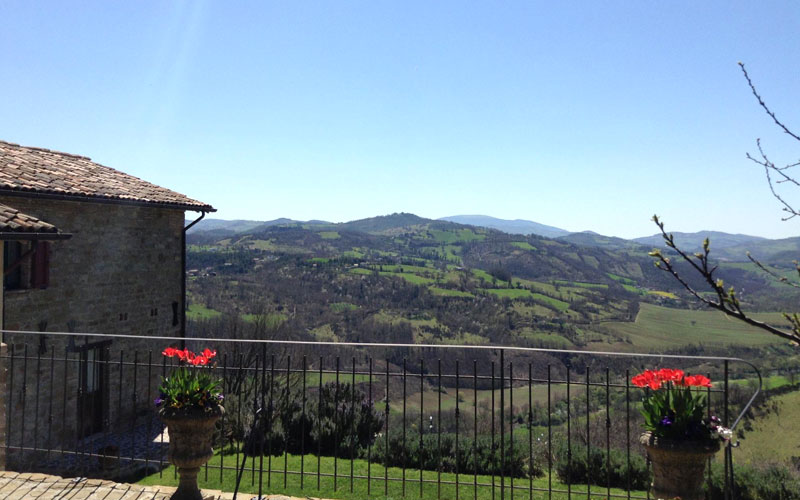
Guesthouse near Gubbio, with views toward Lake Valfabbrica. Gorgeous Umbria.

Guesthouse near Gubbio, with views toward Lake Valfabbrica. Gorgeous Umbria.

At 1:00 I was back on the train to Foligno, then after realizing the Perugia Airport is actually closer to Assisi, I transferred instead to St. Francis’ town, where I caught a 30 Euro cab to the airport. I picked up my rental car, and drove about 45 minutes to my delightful Gubbio guest house — at the end of a 4 km strada bianca (gravel road) with an amazing view of the Val di Chiascia. Highlight of the trip? A stop at a roadside cafe for a croissant — filled with delicious Nutella®. Oh, I also saw one large and beautiful deer I’d startled as I drove down the gravel road, plus a red fox who scampered across the gravel in advance of my tiny, white Citroën C1 rental.

Here in the countryside I’m deprogramming from travel for a couple of quiet days while awaiting the start of Italian classes in Perugia and my home stay there with the Bertolini family. During this green and calm time I’m gathering my thoughts, reading and taking notes from the books I’ve carried from Seattle. My mind is moving from the busy past weeks in Seattle to the upcoming walk I’ll begin after language classes end next month.

Layout of Umbria's Via di Francesco from the www.viadifrancesco.it site

Layout of Umbria’s Via di Francesco from the http://www.viadifrancesco.it site

As I drove yesterday I saw out of the car window the familiar blue and yellow way marks of the Via di San Francesco walk. The walk I’ll write about is all around me here outside of Gubbio. It stretches many miles north into the green hills around Sansepolcro and Santuario Della Verna and south past Assisi and across to the Nera River valley. The area is beautiful, and I’m happy to call it my home for these three months of learning, walking, writing and adventure.


Here are some photos of the lovely agriturismo I stayed at these days:

Emerging from a Self-Induced Travel Coma

As I sat with Don Crawley at Sea-Tac Airport on my way to Italy he said, “Wow, you’ve had a lot going on in your life.” Don’s right, and it’s clear I haven’t had a lot of time to sort through it all. The after-effects of the many changes appeared at different times yesterday.

The most obvious change, of course, was leaving Seattle to go to Italy. My arms felt like they were glued to Theresa as we hugged at the Departures driveway at SeaTac Airport. I didn’t want to let this great woman go. She’s become very important to me since we met on October 31st last year and I’m really not ready to put our relationship on hold with so much yet to discover. This whole Italy plan was hatched before we met and I’m not sure I could’ve passed up a summer with Theresa if I’d known about the possibility as I got the wheels rolling for this Italian guidebook adventure.

With Don at Gate S12 at SeaTac Airport - day of departure.

With Don at Gate S12 at SeaTac Airport – day of departure.

After passing through security, my friend Don Crawley was waiting for me with a cheerful smile. He had noted via Facebook that we’d be at the airport at around the same time — Don going to Los Angeles on business. while I headed to Italy. We sat together over coffee and a pleasant chat while we awaited my plane which would be the first to leave. We began plotting a future rendezvous — Don is cooking up a holiday in France this summer while his wife, Janet, is teaching a class near there and we’ll meet in Florence for a guys’ holiday in the city of Michelangelo.

As we talked, Don may have noted that I had already started to succumb to what I’ve come to call my “travel coma.” My speech starts to slow down, my eyes take on this drowsy look, and my brain begins to operate at partial capacity. It’s something like going into shock after an injury, but a travel coma for me is an odd deadening of senses that somehow helps me deal with the discomforts of being jammed into a small seat for hours at a time while changing time zones, languages, currency and cultures.

Inside the Reykjavik airport.

Inside the Reykjavik airport.

After saying goodbye to Don the coma began to take hold. The flight to Iceland took off at 4:30pm Seattle time and arrived at 5:30am Reykjavik time, but somehow there was never a sunset. Our jet took us north quickly enough that we squeezed dusk and dawn together somewhere above the Arctic Circle. By the time I got to Iceland I’d slept just a touch. I grabbed a sandwich, and orange and some chocolate milk for what I guess was breakfast and then stepped right onto my London flight. The couple next to me must’ve enjoyed watching my head bob up and down as I drifted into and out of sleep in the window seat.

I briefly emerged from my coma as I arrived in London and I realized right at Passport Control that due to the lack of a pen I hadn’t filled in my Arrival Card. I borrowed a pen in line and quickly filled it out with a quick scan and some scribbled responses. Then, when I arrived at the passport desk, the immigration officer asked one of those innocuous but deeply meaningful questions.

“What is your occupation? You left the space blank.”

How could I tell her that I wasn’t sure anymore? I’d just retired after 34 years of ministry as a pastor and was heading to Italy to study Italian and write a guidebook. Not only that, but I hadn’t had time to consider all the consequences and was in a jumble of feelings in the purgatory between the past and present.

“I’m self-employed,” I blurted out.

“Self-employed doing what?” she said in her British accent.

I thought for a long second and then said, “I’m writing a guidebook.”

“OK, you could just put down, ‘writer,'” she said as she filled in my occupation for me and stamped my passport.

And there it is. If anyone asks, I’m a writer. The lady at the desk said so, and I’m not going to argue with her. The vocational transition occurred in a 10-second conversation. Goodbye, pastoring. Hello authoring. The pastoring took four years of seminary, a handful of interviews, psychological testing, much fervent prayer, and the laying on of the hands of two bishops. Becoming a writer took a book contract and the quick decision of an Immigration Officer. Both were conferred on me by others, came after a period of waiting and involved paperwork. So my new vocation sounds official and, at least for now, the appellation will have to do.

IMG_3591

Inside Terminal 5 at Heathrow after being ordained a writer.

After being ordained a writer I stumbled my way between Terminal 1 and Terminal 5 of Heathrow and boarded British Airways for Rome. Following more dozing in the window seat, bathed in the sunlight-that-should-be-nighttime we landed at Fiumicino Airport. Italy at last.

I boarded the train for Termini Station where I’d reserved a B&B for the night and am pretty sure I had a pleasant conversation through the drowsiness of my coma in French, Spanish and English with a retired couple from Montreal in the seats across from me. Then I made my stupid mistake.

I was on the curb outside Termini Station, still partially comatose, when I suddenly realized I didn’t know where my B&B was located. I vaguely remembered it was close to Termini, but without an Italian cell phone plan, my usual guide — Google Maps — was unavailable. A man yelled “Taxi!” and I ignored him, but then impulsively turned around, threw my bags into his car, and told him where I was headed. He took me on a whirlwind drive for about 10 blocks — right back to a point at the train station about 2 blocks from where we’d started. Then he demanded 25 Euros.

Hotel Girandola Bed and Breakfast. Just a block from Termini Station.

Hotel Girandola Bed and Breakfast. Just a block from Termini Station.

I just laughed. Then I said “No,” and handed him a 5 Euro note and some change. He complained loudly in Italian. I smiled and  politely stood my ground — I wasn’t going to pay this scoundrel another cent. After he drove off in a cloud of probable profanity (speaking words I may not learn in my upcoming Italian studies) I wandered a couple of blocks away and found my B&B — right across from the train station, not a block from where I had picked up the cab.

I buzzed the door at the B&B, found my simple, cozy room, had dinner nearby, and headed to bed to sleep off my coma and begin my Italian adventure as a writer. Ciao, Seattle. Bongiorno, Italia.

The Future is Now

CGRLaunch

Answering questions of the press at our launch of The Center for Gun Responsibility last Monday

The last days have been a whirlwind: finishing a list of 42 projects that all had to be done before I could leave, moving all my things (a few into storage and the rest to Theresa’s place), preaching my final sermon at First Church, enjoying a grand retirement celebration, speaking at a press conference for our new non-profit, the Center for Gun Responsibilitysaying goodbye to my now-former roommate, Luke Brown, and preparing my documents, backpack and duffel bag for the big trip to Italy. I leave from Seattle tomorrow and I won’t be back for a few months. In fact, I don’t even have a return ticket yet since I’m not sure exactly how long it’ll take me to research The Way of St. Francis.

The emotions are coming in waves. A wave hit on Sunday as I walked out the door with my robe in hand, knowing I’d preached my last sermon at First Church. It was a tugging in my chest and a brief tear. Then another wave hit as I stood in shorts and t-shirt and said goodbye to the staff in a brief visit to the office today. It was a tightness in my throat and a deep sadness in my heart as turned and walked out the door. Then tonight at dinner with Theresa another wave washed over me. I’ll miss her for almost two months until she joins me in mid-July. I looked across her in the light of the candles she’d lit on her patio table as we shared a last supper. I know tomorrow will be an emotional day as she drives me to the airport and I kiss her goodbye and I say farewell to my Seattle life and become a pilgrim again.

That’s the part that gives me the most joy as I look ahead. Yes, I’ll be a student of the Italian language for the next month in Perugia. Yes, I’ll be an author as I write this guidebook for Cicerone Press. But, yes, I’ll be a pilgrim again. Starting on June 26, after language study in Perugia and a quick trip to see friends in Vienna, I’ll be a pilgrim once more. I’ll walk 600 kilometers from Florence to Rome, arriving around July 31 in the Eternal City.

IMG_3522

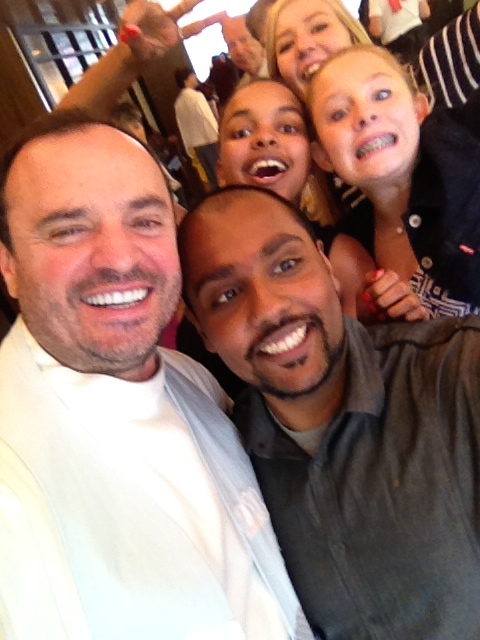
One of many “Selfies with Sandy” from our goodbye festivities over the last weeks at First Church. With Justin Prasad, Reeni Gray and Nadia Gelle.

To be a pilgrim means to travel deliberately and with reverence toward a clear goal. In Spain or Italy I’ve been a pilgrim — for a month every year but one since 2008 — logging over 3000 km on dusty roads, through mountain passes, in rainstorms, in thundershowers and sunshine, with other pilgrims or alone, looking for the saints, sleeping in strange beds or under the stars, eating too little food and drinking too much wine. And I’ve cherished every moment.

I love the rhythm of pilgrim days. Morning light appears out of a strange window above me as I awake in an unfamiliar bed. The road pulls me from warmth and comfort of bed out into the fresh morning. If there’s a cafe there’ll be a slow coffee and a quick croissant. Then an uphill morning. Every morning is uphill, even if the elevation points downward. The first kilometer is cold, then walking warms up my legs and I start to see the day before me. I enter an odd mental and spiritual state between quiet and rapture as I walk, a state that is interrupted only as I look for way marks to assure myself I’m walking the right way. Then lunch — either from the pack or from a restaurant or cafe along the way. Then back to the road as it pulls me downward — the afternoon is always downhill — toward the day’s goal. Then there is a conversation, a bed, some laundry, a meal (again, too much wine) and a blessed night of rest. And then…. repeat. And repeat again. Repeat it three or four dozen times until the grieving begins on the last days when the pilgrimage is nearly complete, which is followed by the grieving that is mixed with joy at the pilgrimage goal, which is followed by the same grieving that begins again after the return home when the feet have stopped aching and the last year’s pilgrimage begins to fade into memory and the next year’s pilgrimage slowly and quietly begins to beckon.

Most pilgrims I know aren’t satisfied with just one pilgrimage. After they’ve tasted the depredations of pilgrim life they beg for more. After a second pilgrimage there’s no happiness until the third. And so it goes.

IMG_3585

These people in body suits just appeared from nowhere

Today between two of my errands I saw another pilgrim — another soul enriched by the joy of walking. I stopped at Starbucks near the stadiums and paused to take photos of a group of people dressed in colorful body suits and dancing in the streets. This sort of thing always happens in Seattle. Anyway, I turned and was stunned to see Ed Tennyson standing there. Ed is another long-distance pilgrim who’s walked the camino many times and who has become a friend and colleague in all things camino over the last few years. He’d walked from his home in West Seattle and was heading to REI — a 20 mile walk round trip. A normal pilgrim day whether he is in town or on camino. We laughed and hugged, he wished me well on my upcoming adventure, and then he turned to continue his walk. As I watched him walk away I realized how I — or rather “we” who bear the name pilgrim — must look to others. A little hunched, a little weary, a little slow, a little contemplative, a little ecstatic.

It’s still a month of language classes away before I actually begin to walk, but I am ready. I am really ready to really walk. It feels right to walk while writing a guidebook for others who will come after. It’s right because I will have to watch carefully and fall in love with it in words and photos and maps. It feels right because it is about sharing this walk with others.

ED&Ellie

Ed Tennyson with wife Ellie on a recent pilgrimage

I know, too, that as I walk I will be doing the pilgrim work of contemplation. It’s been quite the year — separation, moving, divorce, dating, signing a book contract, building a new relationship, retiring, choosing to run for office next year, working hard on important justice topics, rooming with Luke, loving Theresa …… so much. I’m ready to walk, to think, to pray, to write and to be in the new way that God is calling me to be.

I said to Theresa on Sunday afternoon that I felt like I’m stepping into the future right now. “No,” she said. “You can never step into the future. You are always in the present you know.”

“No,” I wish I’d said. “The future is now.”

Starting to pull together many little pieces to form “The Way of St. Francis”

Every day I gain a better appreciation of the challenges an author faces as he or she begins to pull together a book. In particular, I’m coming to appreciate how guidebook authors gather a huge quantity of information and sift it together to create a useful guide.St Francis Walkjpg

Many pieces of information will need to come together for my upcoming book, The Way of St. Francis, due to Cicerone Press at the end of this year. The first is identification of the route itself.

Last year I walked from Assisi to Rome with friends and I loved every step. It was great to see sites related to St. Francis of Assisi, and of course it’s alway fun to walk with fellow pilgrims Sebastian, Jacqueline and Andreas. Beyond our walk form Assisi to Rome, though, as you can see on the map to the left there’s more to the St. Francis walk in Umbria. From Umbria’s perspective the goal is clear — Assisi. The tourist department of Umbria has selected two very specific tracks to the hometown of St. Francis. From the north– starting in Tuscany actually, at Della Verna, a walker can proceed south to Assisi. Walkers can also trek from Rieti to Assisi, approaching it from the south. It makes sense that the Umbria tourist office would focus on walks that stay primarily in Umbria, with Assisi at its heart. St. Francis’ home town attracts over four million tourists each year, after all.

Even with this clear, central track there are choices to be made before I begin my book. In the “northern” route to Assisi the map shows an option. One can either walk to Perugia on the way to Assisi, or straight from Valfabbrica to Assisi, bypassing the capital of Umbria and the many historic and culinary sites in the ancient city, known now as the “Chocolate Capital of Italy” (it’s also a sister city of Seattle!). Choosing to take this option is not a big obstacle, but one choice among many. I’ll walk both routes and make a final decision about including the Perugia option this summer.

A second choice is what to do with the southern loop, which is a circular route through “The Holy Valley” of Rieti, an area filled with important and interesting St. Francis sites. The challenge of a loop through the Holy Valley is obvious — anyone who walks through to Rome only has the choice of one or the other side of the loop. So there’s another minor dilemma to solve. Last year my friends and I walked through Poggio Bustone, the east side of the loop, and weren’t disappointed. It’s a lovely town and important to St. Francis pilgrims.Cathedral in Florence

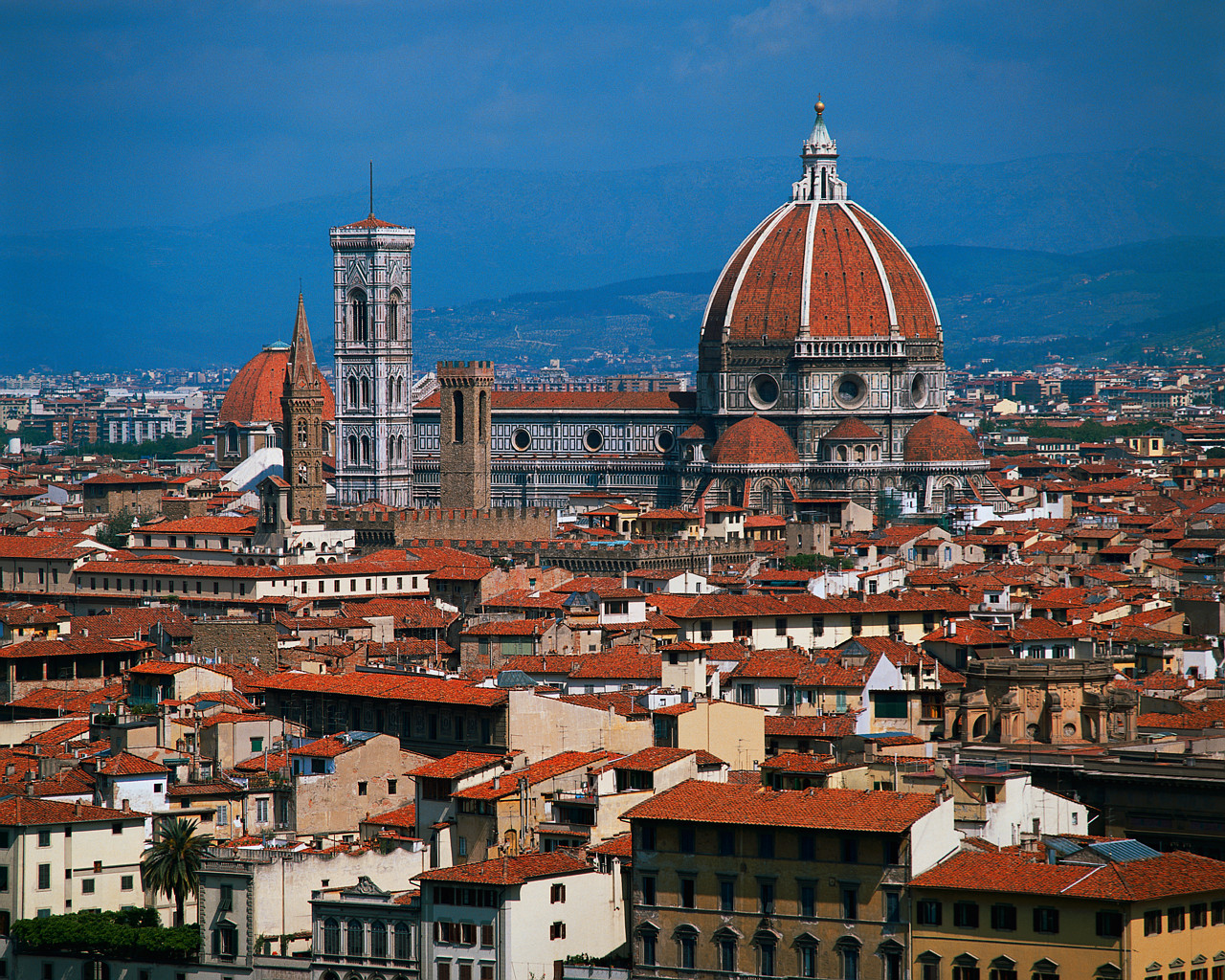
The bigger challenge actually is how to connect this central, Umbrian itinerary to Florence in Tuscany on the northwest and Rome in Lazio on the south west. To me it makes great sense to start in Florence, a city rich in examples of Renaissance art and architecture. Also, it’s much easier to get to Florence than to the tiny and remote sanctuary of Della Verna in eastern Tuscany where Umbria’s itinerary begins. And it makes sense to end in Rome, which is one of the major pilgrim destinations of the world. Many Santiago de Compostela pilgrims feel disappointment when they arrive in Santiago, a mid-sized town with only a day or two of fairly minor sites to explore. Rome, in comparison, is nothing short of spectacular. For religious pilgrims there are too many saints’ relics to see in a brief visit, not to mention absorbing the Vatican City and sites of Ancient Rome. So I’m following the lead of a recent German language guidebook and will include the entire Florence to Assisi to Rome walk in my upcoming tome. This creates a 30-day pilgrimage from, through and to three of the most wonderful cities in the world.

With this choice the itinerary is almost complete. To connect the northern Umbrian sites to Florence we can fortunately rely on the fabulous hiking trail known as the Grande Escursione Appenninica (GEA), which is one of the major Italian mountain trails, covering part of the distance between Florence down to the northernmost St. Francis sites in the Umbrian itinerary. Sadly, there’s not a clearly marked trail from Florence to the first walking stage and the German guidebook puts pilgrims on a short train ride for the first day. When I arrive in Italy I’ll start looking for a good walking route that connects Florence to the little town of Camaldoli for connection to the GEA path. I may have my Austrian friend, Jacqueline, along for a few days to help with that effort. It’s about six days on foot from Florence to Della Verna.

Connecting to the route to Rome has its own challenge. I’ll need to decide what to do with the “loop” — get to Rieti through Greccio or through Poggio Bustone? Though I enjoyed Poggio last year, going that way deletes two important sites from the itinerary (Greccio and Fonte Colombo). I’ll check those two out this summer, too, to see if it’s worthwhile to travel that way somehow. In addition, there’s one day on the Lazio portion without a good overnight stop, so this summer I’ll scout out an overnight at Farfa Abbey instead of going through Ponticelli as the Lazio itinerary suggests. This adds a day, but potentially gives an interesting and inexpensive overnight just three nights out of Rome. To confirm my choices I’ve already made contact with the tourist offices in Umbria and Lazio, both of which are very interested in spreading the news about these walking paths.

st-peters-basilica_6809_600x450

The joy of planning this guidebook is knowing that pilgrims who choose this route have ahead of them a memorable and beautiful pilgrimage. To me this route should be of particular interest to experienced pilgrims who’ve already walked the Camino de Santiago and are looking for a new and challenging walk. The Way of St. Francis has some clear highlights — Florence, Assisi and Rome — that in my opinion surpass the wonders of the Camino de Santiago. It has some disadvantages, too. The route is “young” and the infrastructure is “almost” there. This makes it something like the Camino de Santiago must’ve been in the 1980’s before the height of its reemergence today, when over 250,000 pilgrims walk it each year.

Exclusive of the relatively primitive infrastructure this route has something that makes it very special. A shining light along every step is the memory of St. Francis of Assisi. Even 800 years later his name brings a smile to the faces of local Italians, and his simple words of love and faith and unity with creation are satisfying words for our hungry souls.Itinerary

I’ve already begun an online study of accommodations on the various routes and have a master list of hotels, hostels, restaurants and cultural sites to visit. On May 21 I’ll fly to Rome, head to Perugia for a month of language classes, and walk this new/old route and its various options twice, carefully noting the best paths, accommodations, food sources and notable sites to visit. Tens of thousands of words, thirty-five maps and 150 photos later I’ll be ready to send The Way of St. Francis to Cicerone Press for publication. I hope it will be a good resource for pilgrims who seek a walk of spirit and adventure and joy.