
Day Zero on the California Mission Trail – Oakland to Petaluma
4

I begin the trip to California for Day “-1.”
Cursed with a longtime camino addiction and Europe closed to Americans Theresa told me a few weeks ago, “You need a walk.” She was right. After a few months of being COVID-couped up I’m ready to hit the road. What better choice than to do a camino right in my backyard?
I’ve been hearing for a few years about the California Mission Walk, and a few months ago some wonderful folks in Santa Barbara wrote me and asked what it would take to do a guidebook on the journey. I’ve been working with them and advising them in their project, but in the back of my mind I’ve also been wondering just what the walk is like.
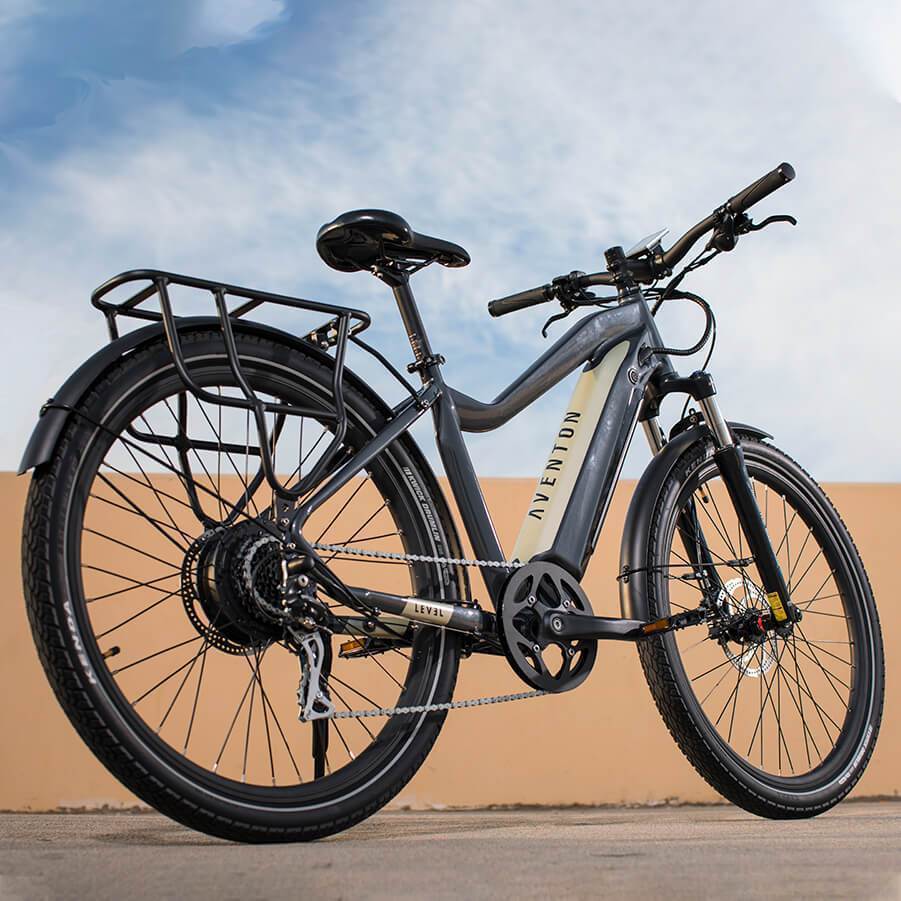
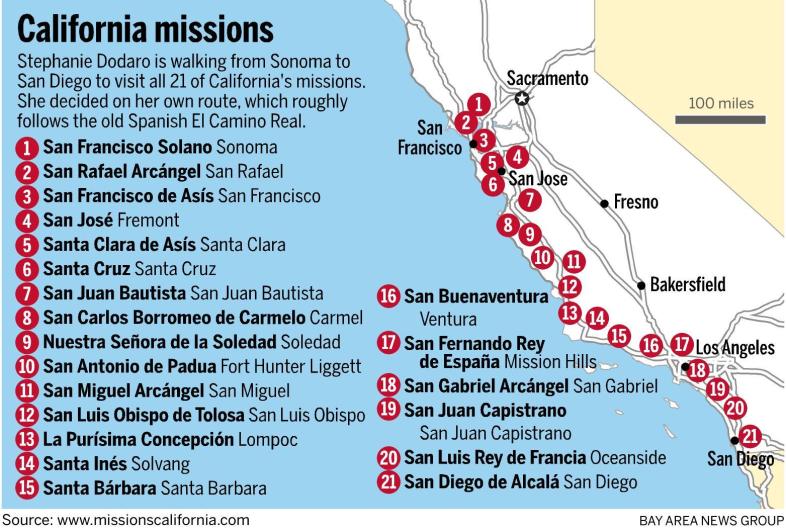
The bare facts are that this walk connects the 21 Franciscan missions established in the 18th c by Spanish missionaries on the California coast between San Diego on the south and Sonoma on the north. By my calculations the distance is 850 miles or about 50+ walking days. I’ll bike it instead so I can make better time, and after last year’s rides in Spain and Italy I’ve come to appreciate the flexibility that comes from having two wheels available for side trips and additional exploration. I’ll use my new Aventon Level e-bike, which already presents a few problems: ebike batteries aren’t allowed on airplanes or some ferries. So here’s the plan: I’ll take the train to the Bay Area, ride and SMART train it to Petaluma, then ride up to Sonoma for my beginning. I’ll then ride around 35-40 miles a day — a relaxed pace — and make it to San Diego in time to high-tail it back home on the train for a couple of important birthdays and an anniversary.
In addition to the exploration, this trip will be something of a homecoming, too. My great-grandparents walked from Mexico to Mission San Juan Capistrano in 1860, and my mother’s side of the family is sprinkled all around Southern California. My mom was born in San Diego and four of us five kids were born in SoCal, too. I attended kindergarten and first grade there, so while I’m in town I’ll ride by our old house, my grandmother’s house, my old schools, and the church where I was baptized.
There’s a strong Mission Walkers group, and I’ve already benefitted from contacts with people like Butch Briery, Steven Woody, Jill Ballard, and many, many others. They’re all super-friendly and eager to help. I’ll have a tent and sleeping bag with me, plus all the usual gear. Should be fun!




The manuscripts above come from an 11th c scribe who copied a text recording overnights on the 990 walk of Archbishop Sigeric of Canterbury from Rome to the English Channel. They also record the churches he visited in Rome, providing a rare list of what would interest an Anglo-Saxon prelate from among Rome’s many churches. Both lists are a fascinating and unique window into the world of pilgrimage from 1000 years ago.
Here’s the transliterated text of the above manuscript along with a translation below. All are thanks to Veronica Ortenberg and can be found in her article “Archbishop Sigeric’s journey to Rome in 990.”
Transliterated text:
Primitus ad limitem bead Petri apostoli, deinde ad sanctam Mariam scolam Anglorum, ad sanctum Laurentium in craticula, ad sanctum Valentinum in ponte Molui, ad sanctum [sic] Agnes, ad sanctum Laurentium foris murum, ad sanctum Sebastianum, ad sanctum Anastasium, ad sanctum Paulum, ad sanctum Bonefatium, ad sanctum [sic] Savinam, ad sanctam Mariam scolam grecam, ad sanctam Ceciliam, ad sanctum Crisogonum, ad sanctam Mariam transtyberi, ad sanctum Pancratium, deinde reversi sunt in domum. Mane ad sanctam Mariam rotundam, ad sanctos Apostolos, ad sanctus Iohannes [sic] in
Laterane; inde refecimus cum domini [sic] apostolico Iohanne, deinde ad Ierusalem, ad sanctam Mariam maiorem, ad sanctum Petrum ad uincula, ad sanctum Laurentium ubi corpus eius assatus [sic] fuit.
Iste sunt submansiones de Roma usque ad mare: I, urbs Roma; II, Iohannis VIIII; III, Bacane; IIII, Suteria; V, Furcari; VI, sancte Valentine; VII, sancte Flauiane; VIII, sancta Cristina; IX, aqua pendente; X, sancte Petir in pail; XI, Abricula; XII, sancte Quiric; XIII, Turreiner; XIIII, Arbia; XV, Seocine; XVI, Burgenove; XVII, ./Else; XVIII, sancte Martin in fosse; XIX, sancte Gemiane; XX, sancte Maria glan; XXI, sancte Petre currant; XXII, sancte Dionisii; XXIII, Arneblanca; XXIIII, Aqua nigra; XXV, Forcri; XXVI, Luca; XXVII, Campmaior; XXVIII, Luna; XXIX, sancte Stephane; XXX, Aguilla; XXXI, Puntremel; XXXII, sancte Benedicte; XXXIII, sancte Modesanne; XXXIIII, Philemangenur; XXXV, Mezane; XXXVI, sanctae domnine; XXXVII, Floricun; XXXVIII, Placentia; XXXIX, sancte Andrea; XL, sancte Cristine; XLI, Pamphica; XLII, Tremel; XLIII, Uercel; XLIIII, sancte Agath; XLV, Eueri; XLVI, Publei; XLVII, Agusta; XLVIII, Sancte remei; XiJX, Petrescastel; L, Ursiores; LI, sancte Maurici; LII, Burbulei; LIII, Uiuaec; LIIII, Losanna; LV, Urba; LVI, Antifern; LVII,Punterlin; LVIII, Nos; LIX, Bysiceon; LX Cuscei; LXI, Sefui; LXII, Grenant; LXIII, Oisma; LXIIII, Blsecuile; LXV, Bar; LXVI, Breone; LXVII, Domaniant; LXVIII, Funtaine; LXVIIII, Cadeluns; LXX, Rems; LXXI, Corbunei; LXXII, Mundloduin; LXXIII, Martinwzd; LXXIIII, Duin; LXXV, A6erats; LXXVI, Bruwsei; LXXVII, Teranburh; LXXVIII, Gisne; LXXX, Sumeran.
And here is Ortenberg’s translation:
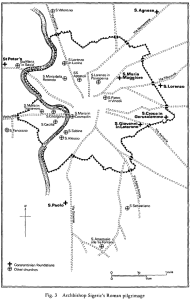
Ortenberg’s map of Sigeric’s pilgrim churches in Rome
First in the light of blessed St Peter, apostle (St Peter’s Basilica); to Santa Maria at the Angolorum School (now Santo Spirito in Sassia); to San Lorenzo in Lucina; to San Valentino near Ponte Milvio; to San Lorenzo Outside the Walls; to San Sebastiano; to San Anastasio; to San Paolo (outside the walls); to San Bonifazio; to Santa Sabina; to Santa Maria at the Greek School; to Santa Cecilia; to San Crisogono; to Santa Maria Trastevere; to San Pancrazio; to Santa Maria Rotunda (Pantheon); to the Holy Apostles; to San Giovanni in Laterano; to Jerusalem (Santa Croce in Gerusalemme); to Santa Maria Maggiore; to Saint Peter in Vincoli; to San Lorenzo in Panisperna.
These are the submansions (stages or stations) from Rome to the Sea: I. City of Rome, II. San Giovanni in Nono (La Storta); III. Bacccano; IV. Sutri; V. Santa Maria de Forcassi; VI. San Valentino (Viterbo); VII. San Flavianus (Montefiascone); VIII. Santa Cristina (Bolsena); IX. Acquapendente; X. San Pietro on Paglia (near Radicofani); XI. Abricula (Briccole); XII. San Quirico (d’orcin); XIII. Torrenieri; XIV. Arbia (Ponte d’Arbia?); XV. Siena; XVI. Burgo Nuovo d’Isola; XVII. River Elsa (near Colle Val d’Elsa); XVIII. San Martino Fosci (near Monteriggioni); XIX. San Gimignano; XX. Santa Maria, Chianni; XXI. San Pietro Corzzano; XXII. San Genesia (San Miniato); XXIII. Arneblanca (near Fucecchio); XXIV. Aqua Nigra (near Cappannori); XXV. Porcari; XXVI. Lucca; XXVII. Camaiore; XXVIII. Luni; XXIX. San Stefano di Magra (Sarzana?); XXX. Aulla; XXXI. Pontremoli; XXXII. San Benedetto (Montelungo); XXXIII. San Moderannus (Berceto); XXXIV. Fornovo di Taro or Felegata; XXXV. Medesano; XXXVI. San Donnino (Fidenza); XXXVII. Fiorenzuola d’Arda; XXXVIII. Piacenza; XXXIX. Corte San Andrea; XL. Santa Cristina; XLI. Pavia; XLII. Tromello; XLIII. Vercelli; XLIV. Santhiá; XLV. Ivrea; XLVI. Publei (?); XLVII. Aosta; XLVIII. Saint-Remy; XLIX. Bourg-Saint-Pierre; L. Orsiéres; LI. Saint-Maurice; LII. Vervey or Vouvry; LIII. Vevey; LIV. Lausanne; LV. Orbe; LVI. Antifern (?); LVII. Pontarlier; LVIII. Nods; LVIX. Besançon; LX. Cussey; LXI. Seveux; LXII. Grenant; LXIII. St Geosmes; LXIV. Blessonville; LXV. Bar (Bar-sur-Aube)”; LXVI. Brienne; LXVII. Donnement; LVIII. Fontaine; LIX. Châlons sur Marne; LXX. Rheims; LXXI. Corbény; LXXII. Laon; LXIII. Martinwaeth (?); LXXIV. Doingt; LXXV. Arras; LXXVI. Bruay-en-Artois; LXXVII. Thérouanne; LXXVIII. Guisnes; LXXX, Sombre, near Wissant.
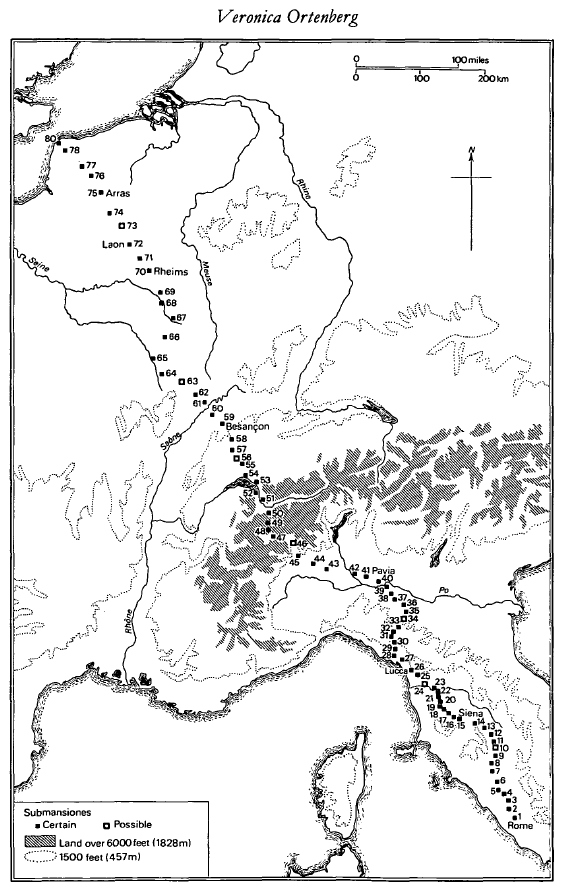
Ortenberg’s map of Sigeric’s stages from Rome to the Channel.
 I love to share information about the great pilgrim walks I’m enjoyed over the past ten years. Here are some upcoming dates. If you’re in the neighborhood, I’d love to meet you. I’ll have copies of my guidebooks with me which I hope give you some excellent tools to make a walk of your own. I’m also working on making webcasts or vlogs available for these talks so people who can’t attend can still enjoy the content. Hoping to see you!
“Walking Spain’s Camino de Santiago”
March 26, 2020, 6:00-7:00
Location: Rick Steves Travel Center, 130 4th Ave N, Edmonds, WA 98020
Notes: This is my first public event on my Camino de Santiago guidebook. Slide presentation on the facility’s big flat screen TV. Max registration is 70, so early reservations are encouraged.
To register, click here>>>
“Walking the Pilgrim Trails of Italy”
March 28, 2020, 1:00-2:00
Location: Savvy Traveler Store
Address: 112 5th Ave S, Edmonds, WA 98020
Notes: People have been asking for another Italy presentation. The room fits only about 40 people, so early reservations are encouraged. My Italy events generally fill the room.
To register, click here>>>
“Author Event: The Camino de Santiago”
April 16, 2020, 7:00-8:30
Location: Stanford’s Travel Bookstore
Address: 7 Mercer Walk, Covent Garden, London, UK
Notes: Mark your calendars….registration is not yet open, but the link below should be live by end of February. Room capacity is 50
To register, click here>>>
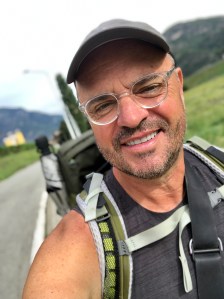
Selfie taken on my Via Francigena in 2019.
Over the last weeks I’ve been working out a plan with my publisher, Cicerone Press, to join their staff with the goal of helping to bring outstanding pilgrimage guidebook and app resources to English-speaking pilgrims who want to walk on Europe’s great camino/pilgrimage trails. I’m happy to announce we’ve come to an agreement, and I’ll be joining Cicerone’s staff as Associate Publisher at the start of next month. The position is 1/2 time, which allows me to continue pursuing the writing and guiding projects I also hold dear.
My relationship with Cicerone Press began in 2012, after I walked the Camino del Norte in Spain. I’d had to use French and Spanish language guidebooks since nothing was available in English at the time, and I figured if nobody else had done it yet, I should. Just as I was making the first inquiries, I discovered Cicerone was already working with an author for that very route. I offered to review the book when it was ready, which I did, and I liked my interactions with the company. In 2013 I walked the Via di Francesco with friends — again with no English-language guidebook available — and while I was visiting my sister in Honolulu later that year I put together a proposal to Cicerone to publish a guide for that route. They said yes, I wrote the Way of St Francis guidebook, then the Camino de Santiago guidebook (to be released in a few weeks) and now I’m working on a new Cicerone 3-volume guidebook for the Via Francigena.
I’m starting to become adept at
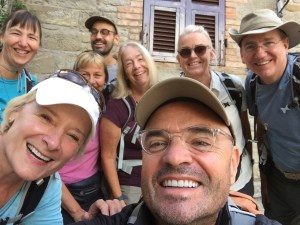
Our group of pilgrims as we near Assisi in 2016.
walking while recording my GPS tracks, taking notes on the walk and its sights, and taking photographs of my journeys. My winters in my semi-retirement are now spent at my desk where I compile my GPS tracks, gather my notes, edit my photos, lay out my maps, and write about how to enjoy the treasures of these pilgrim walks that have become so dear to me.
Working for Cicerone will certainly be a learning experience. I’ll visit company headquarters in the UK several times each year, but will mostly tele-commute from home, all of which bring their own challenges. The last time I had a permanent position in anything other than a church or church-related institution was over forty years ago! How will Cicerone’s staff react to having a pastor wandering among the desks and bookcases of their offices? As well as working with the great Cicerone crew, I’ll be working with authors, with pilgrim organizations and with local leaders who want an excellent English-language guidebook for their pilgrimage route. It’ll be fun. Cicerone’s press release is below. A big congrats and thanks to Cicerone publisher Jonathan Williams for his investment in the walking pilgrimage market. It means a lot to those of us who love the world’s pilgrimage trails.
Announcement – Associate Publisher: Caminos and Pilgrimages
20 December 2019
For immediate release
Cicerone is pleased to announce the appointment of Sandy Brown as Associate Publisher for Caminos and Pilgrimages. “Sandy’s leadership will be vital in solidifying Cicerone’s position at the forefront of English-language camino and pilgrimage guides,” said Cicerone publisher, Jonathan Williams. The new position will involve direct engagement with pilgrims and organisations, working with Cicerone authors and collaborating with Cicerone’s editorial, production and marketing teams to enhance what is already a notable portfolio of camino and pilgrimage guides.
Sanford “Sandy” Brown is an author, community activist, ordained minister and pilgrimage trekker from Seattle, Washington. Since 2008 he has walked and biked nearly 10,000 kilometers on pilgrim trails in Spain, France, Switzerland and Italy. His walk on the Via di Francesco in 2014 led to his first Cicerone guidebook, The Way of St Francis: From Florence to Assisi and Rome, now in its third printing. Sandy’s latest Cicerone guidebook is a completely revised edition of Cicerone’s pioneering guidebook to the Camino de Santiago by Alison Raju. At its release in January 2020, this new Camino de Santiago: Camino Francés guide, map book and smartphone app will put state-of-the-art resources at the fingertips of Camino de Santiago pilgrims. Currently Sandy is working on an updated Cicerone guide for the Via Francigena pilgrim walk, with two volumes set for production later this year. An ordained United Methodist minister, he holds degrees in medieval history and theology, as well as a doctorate in gender, sexuality and spirituality from Princeton Theological Seminary. Sandy lives in Seattle, USA with his wife Theresa.
In addition to the above mentioned titles, Cicerone’s current camino an pilgrimage guidebooks include The Camino Portugues (Kat Davis, 2018), Camino Inglés and Ruta do Mar (Dave Whitson and Laura Perazzoli 2019, 3rd edition),Camino del Norte and Camino Primitivo (Whitson and Perazzoli, 2019, 3rd edition), Japan’s Kumano Kodo Pilgrimage(Kat Davis, 2019), Walking the Pilgrim’s Way: To Canterbury from Winchester and London (Leigh Hatts, 2017, 2ndprinting), and many more.
Established in 1969, Cicerone stands at the forefront of walking, trekking, mountaineering and cycling guides for destinations all over the world, with nearly 400 titles in print. For more information go to http://www.cicerone.co.uk/contact
You may have noticed that caminoist.org has been quiet the last several months. There’s a good reason — I’ve been immersed in a time-consuming pilgrim project, a new guidebook on the Camino Francés route of the Camino de Santiago.
Wait, another guidebook on the Camino, you ask? In reality this is not a new guidebook, I should say. One of the first guidebooks on the Camino was authored by the esteemed Alison Raju and published by Cicerone Press many years ago. What I’m doing is renewing and re-invisioning Alison’s work in a new format and for a new day by the same publisher. I was approached in Jan 2018 by Joe Williams and Jonathan Williams of Cicerone who recognized it was past time for a refresher on Alison’s work. They wanted the project to look and feel different than other camino guidebooks and proposed this formula:
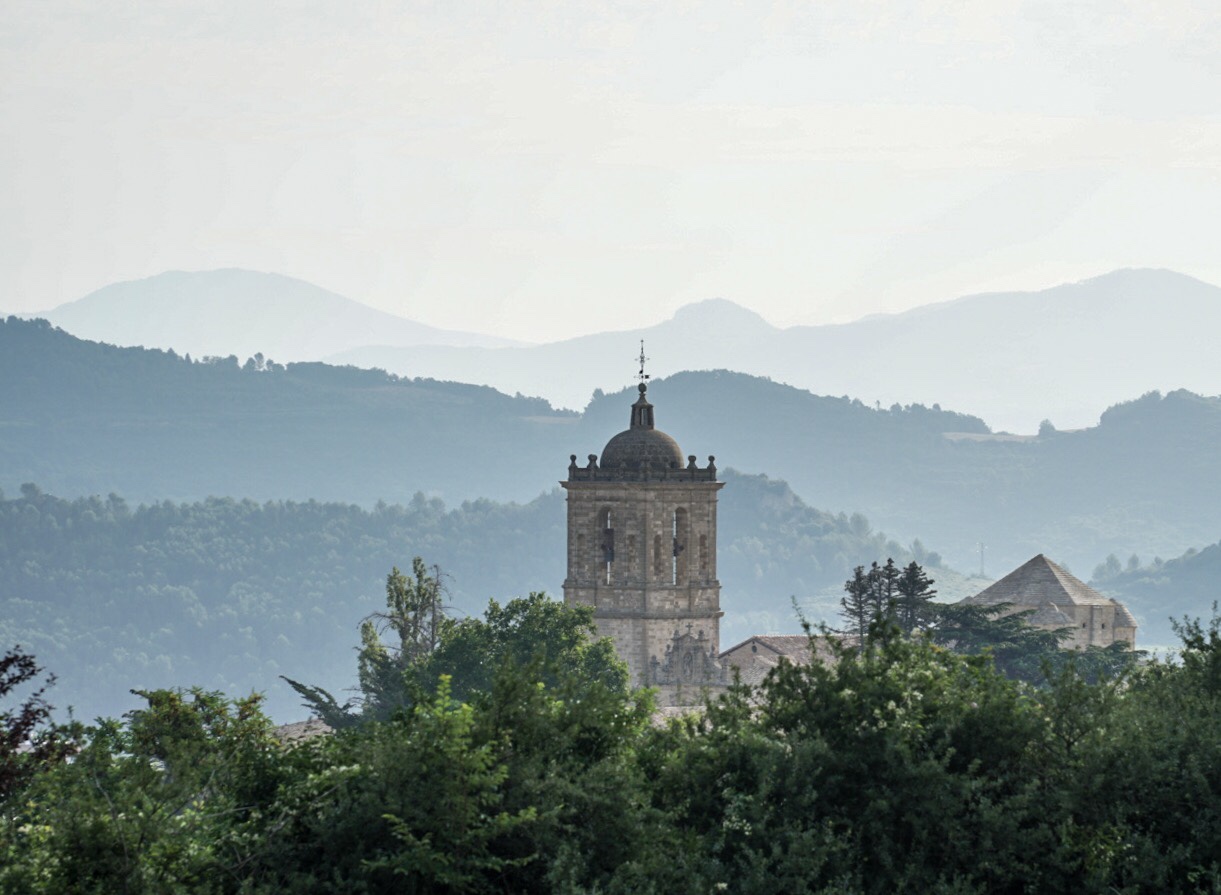
Tower of the Irache Monastery outside Estella, Spain
In short, they wanted to put together the best guidebook/map/app set on the market today. How could I say “no” to a goal like that?
I began researching the route — which I’d already walked twice — looking for the best print materials to form the historical core of the project. I read important documents like the Codex Calixtinus, the original guidebook from 900 years ago, and local histories of Galicia. I read art history books and Spanish history texts. Then I planned my trip.
Theresa and I took off for a five week walking camino last July/August and just had an absolute blast together. She’s such a great walker and explorer and so much fun to be with 24/7. Including 2014’s Way of St Francis project, this was her second time walking with me while I was researching, writing, snapping photos and recording GPS tracks. We walked the entire route from Saint-Jean-Pied-de-Port to Finisterre and Muxía, biking the Meseta to save time.
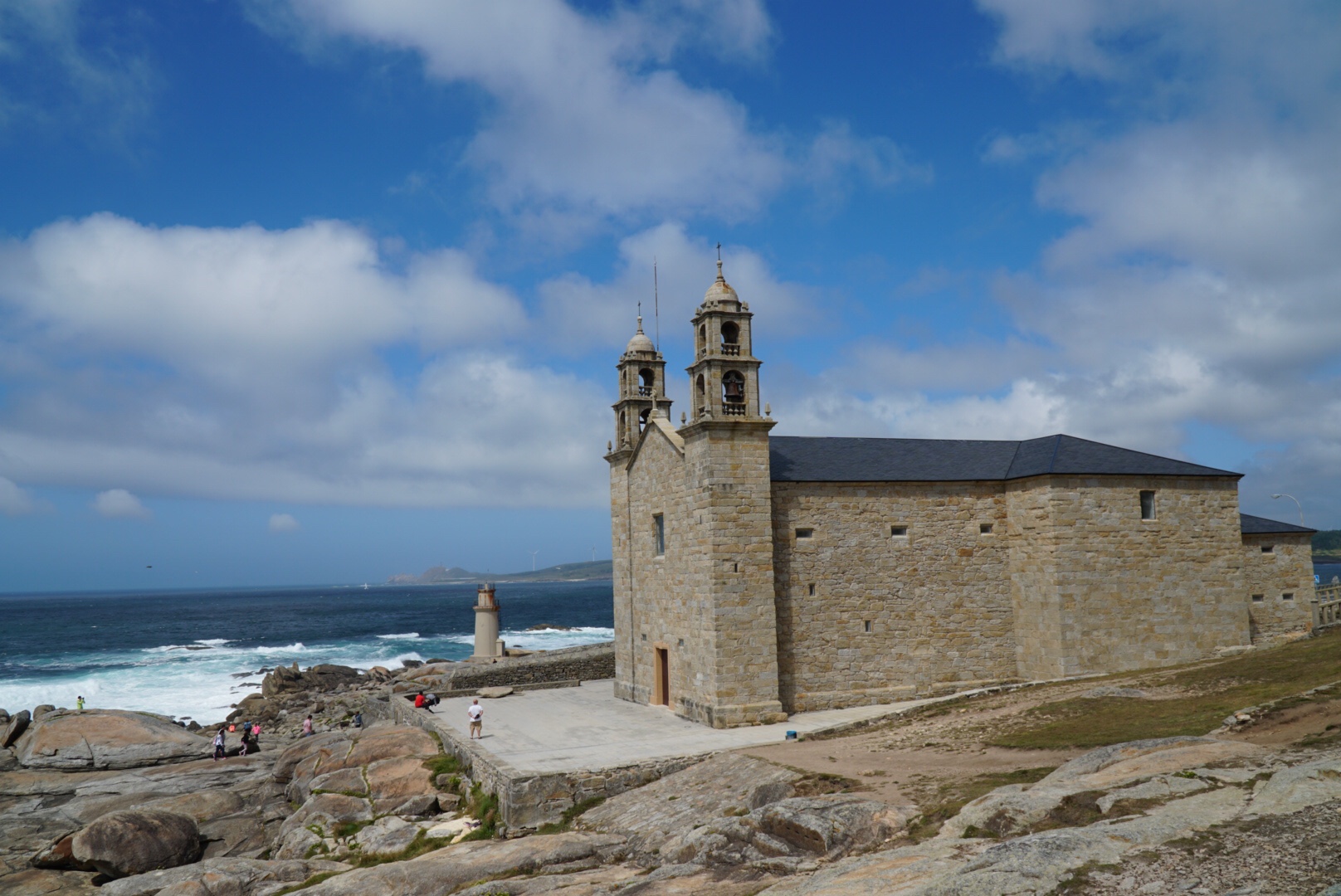
The Church of Nuestra Señora de la Barca, Muxía, Spain.
After the walk the work began. I sat down with notes, tracks and photos and began the work of putting them all together into an excellent guidebook. Cicerone knew I’d need help, so they stepped forward to purchase great photos from Seattle friend Rod Hoekstra, provided seasoned help for optional camino paths from Cicerone author Mike Wells, and then brought onboard my sister-collaborator, Roxanne Brown Nieblas, to put together the accommodations database that is the heart of any great camino guidebook. Jonathan Williams himself walked parts of the path and sent in his photos, too. Last January I traveled to the UK to meet the Cicerone team and compare our notes and expectations. Finally at the end of last month, after many weeks of every-spare-non-work-minute devoted to the project, I pressed “Send” and entrusted the manuscript and materials to Cicerone for creation of what I know will be a beautiful, elegant and extremely helpful new guidebook.
As their work of editing and producing the book begins my work takes a new turn. This summer I’ll return to Spain and bike the Way, draft guidebook in hand, and check out every detail for accuracy and clarity. At the same time I’ll enter information into the database that forms the core of the smartphone app that’s part of the package. I believe what purchasers will get, once it’s all done in January 2020, is a state-of-the-art guidebook that offers more and better information than anything else out there. Through it all I came to a renewed appreciation for the Camino Francés which is unlike anything else out there and really is a must for any walking pilgrim. I hope readers will see my love of this amazing walk through each page.
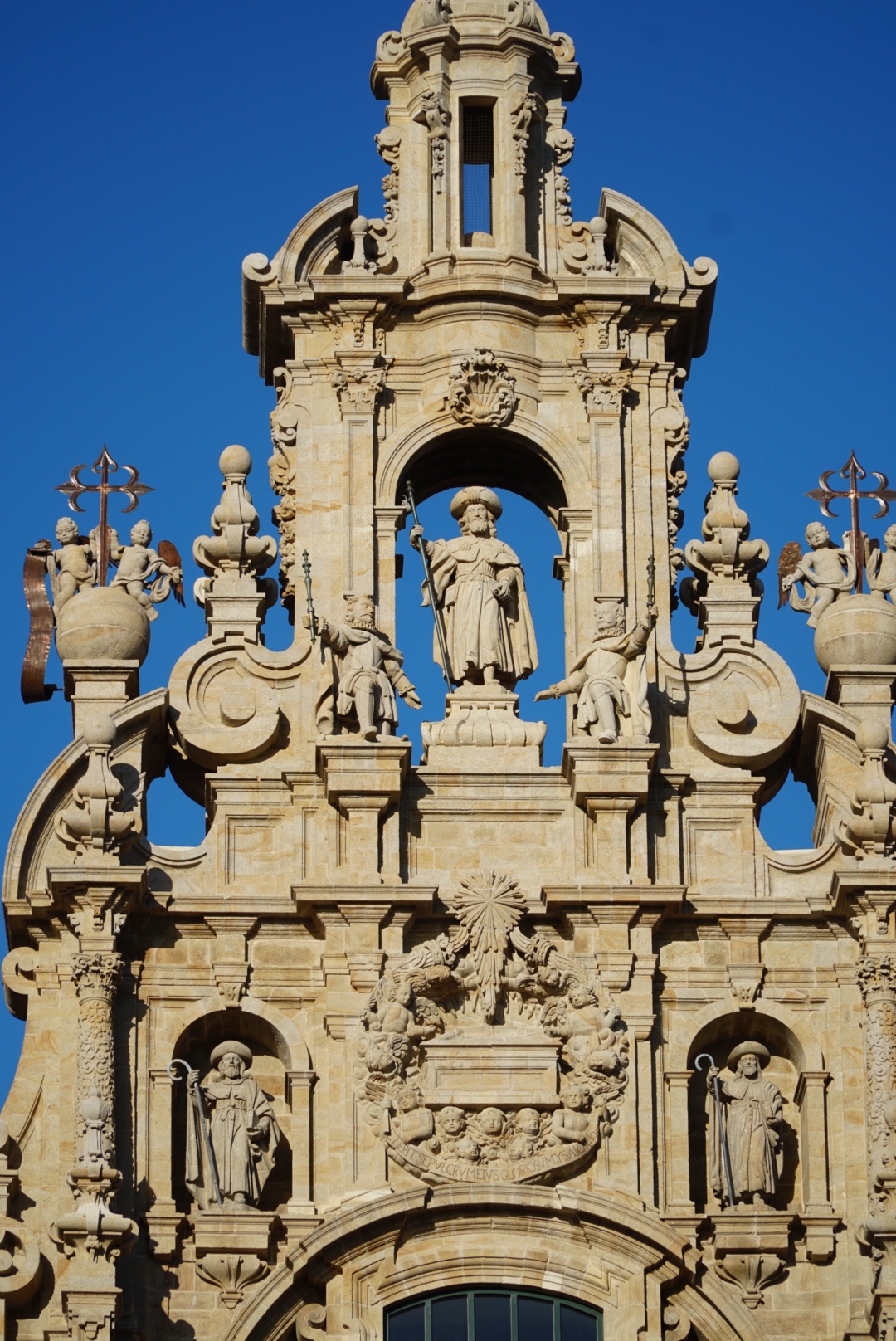
Recent pilgrims are happy to see that the Cathedral de Santiago’s façade is restored to its original lustre.
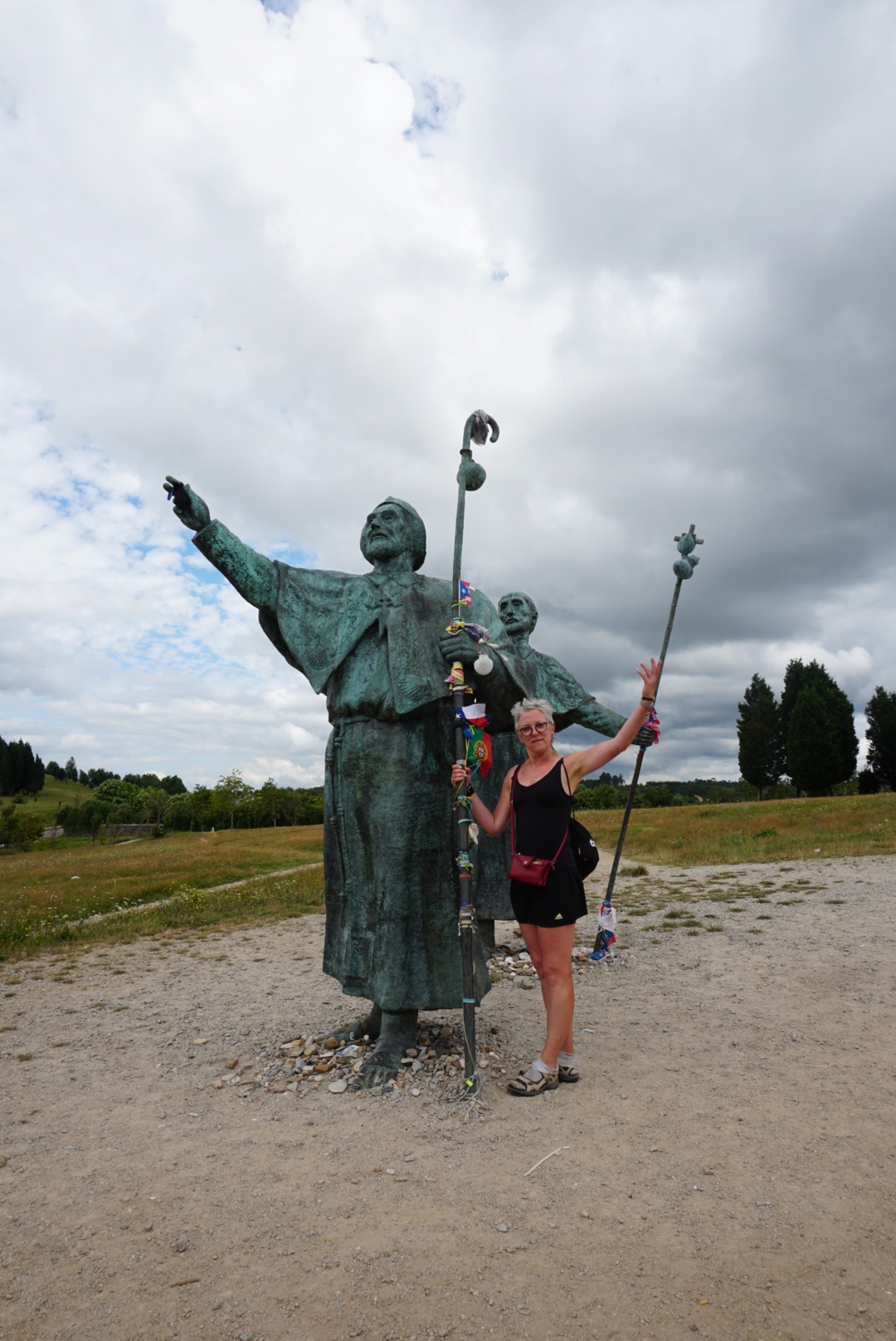
I’d never taken the extra time to see this pilgrim statue until this year. There’s Theresa!
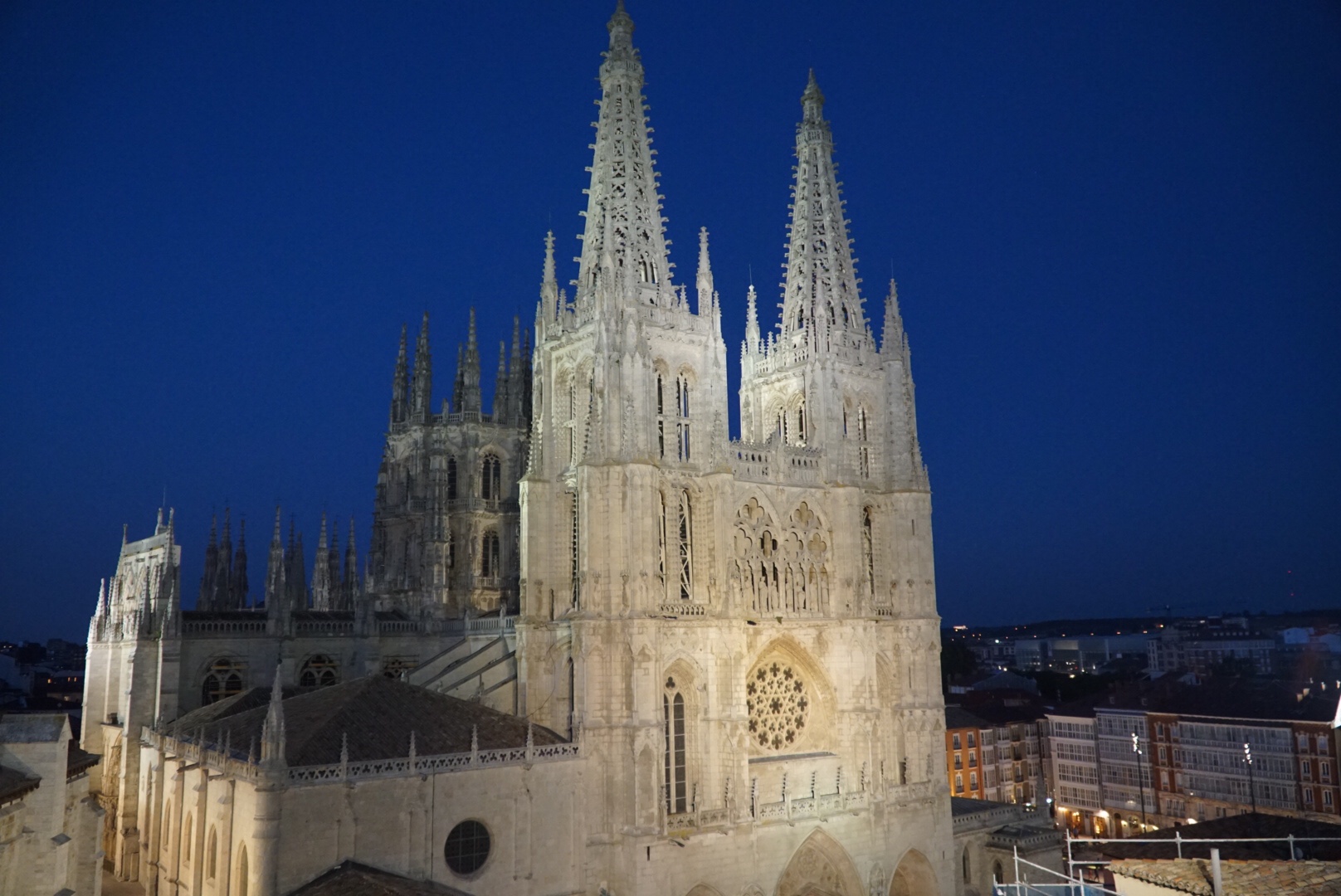
No better place to stay in Burgos than Mesón del Cid hotel. Here’s the view at night.
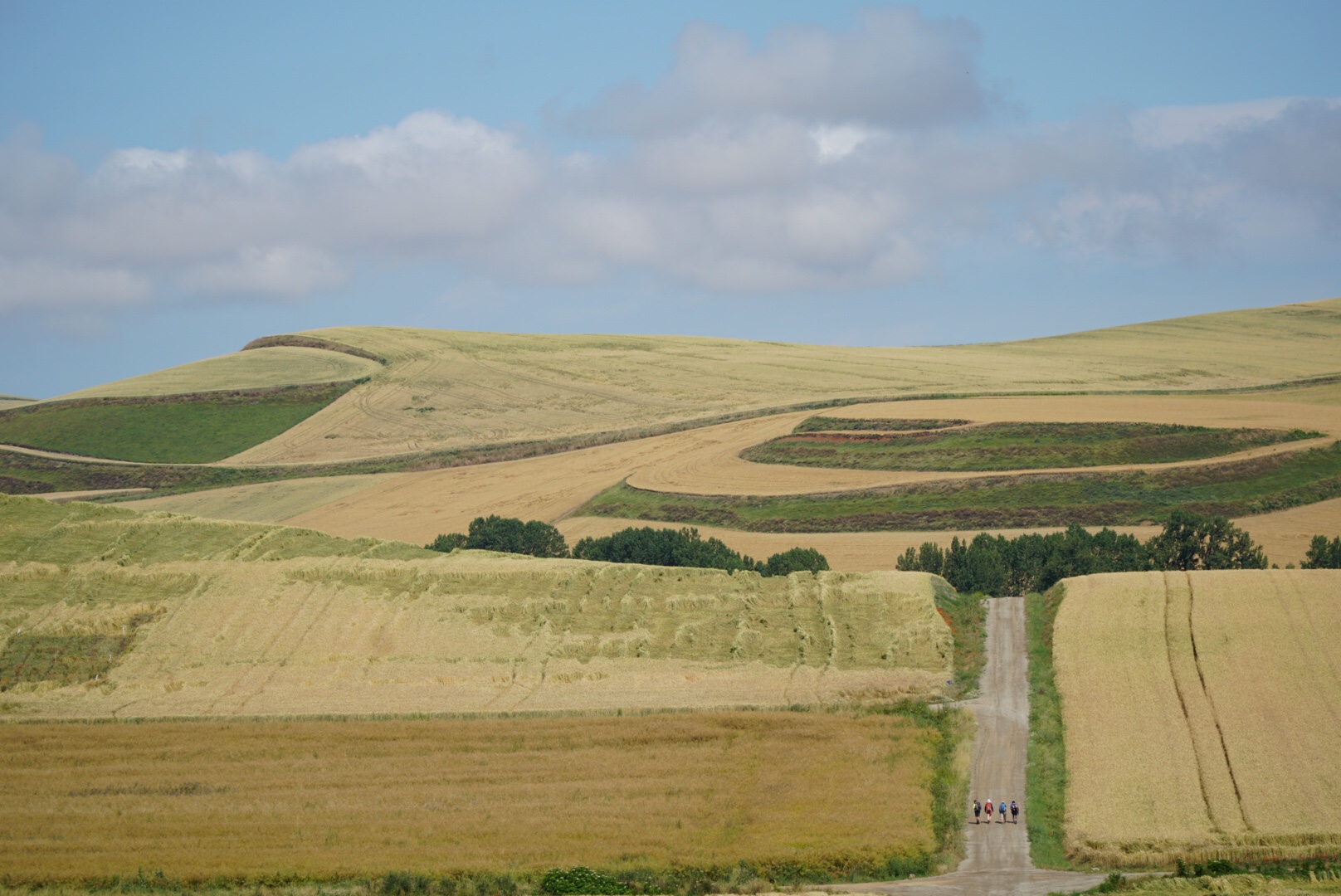
View from the overlook at Grañon, one of my favorite pics.
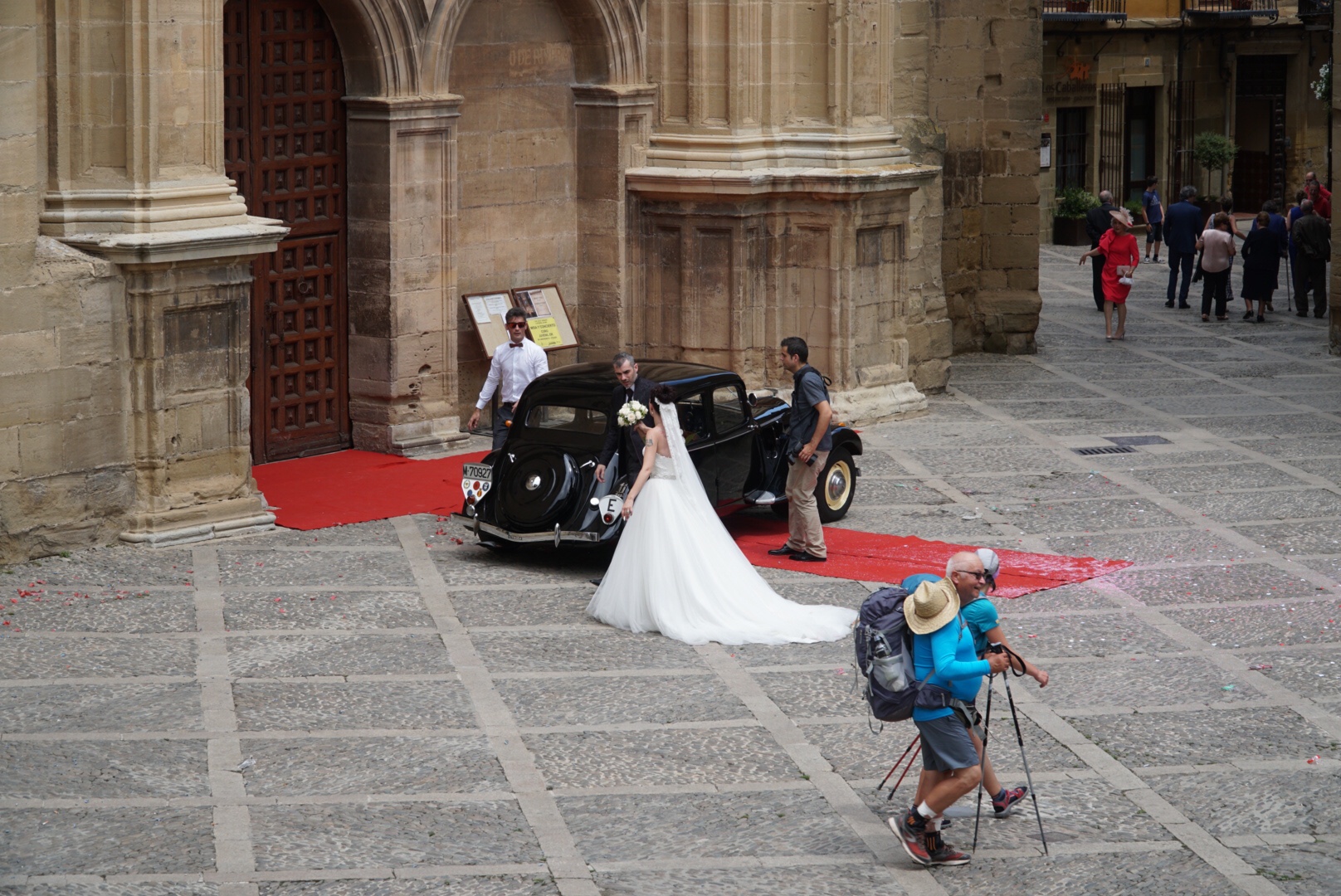
Some pilgrims wander into a wedding scene. Taken from another great pilgrim hotel – the Parador in Santo Domingo de la Calzada.
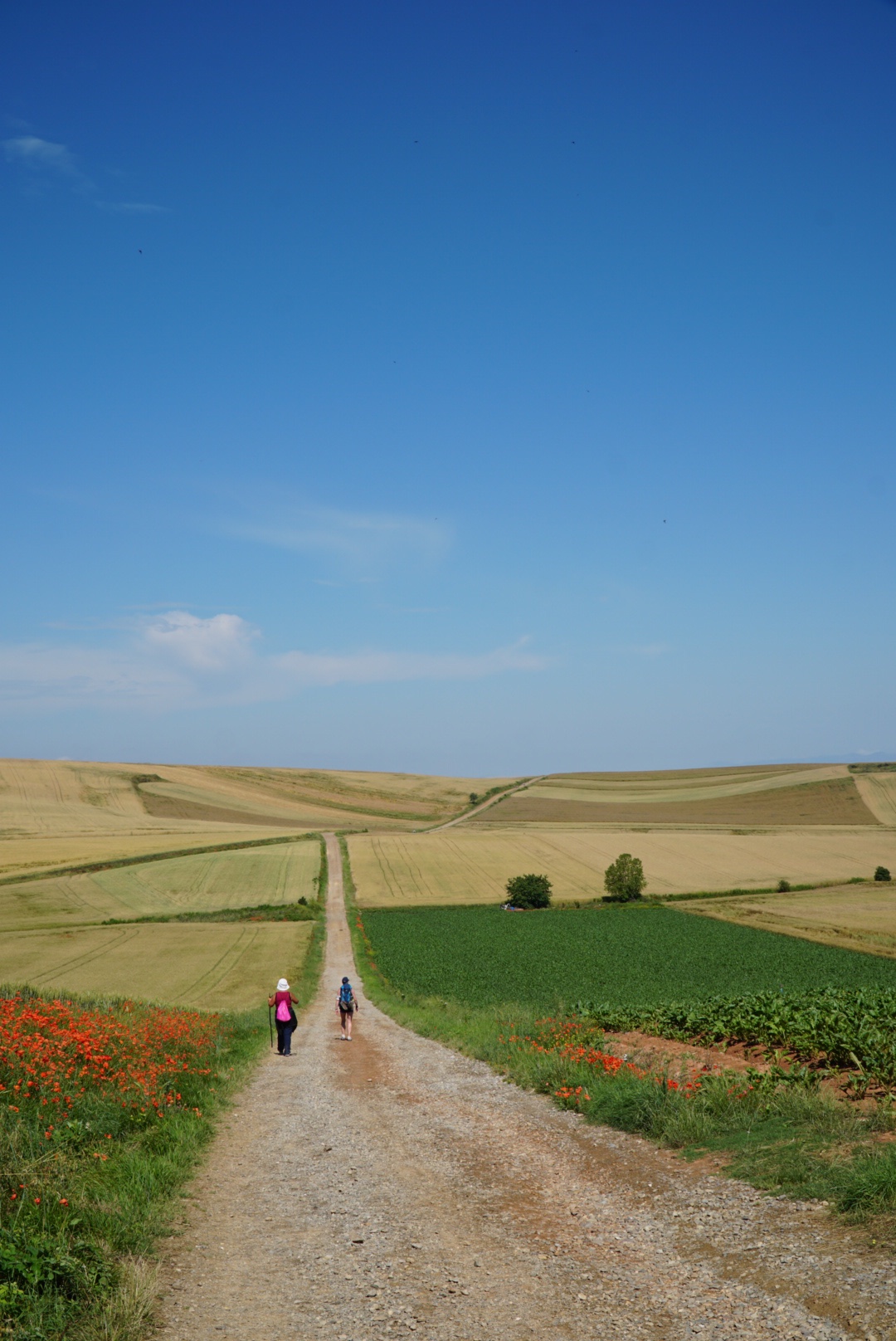
This little valley is one of the most-photographed landscapes on the Camino.
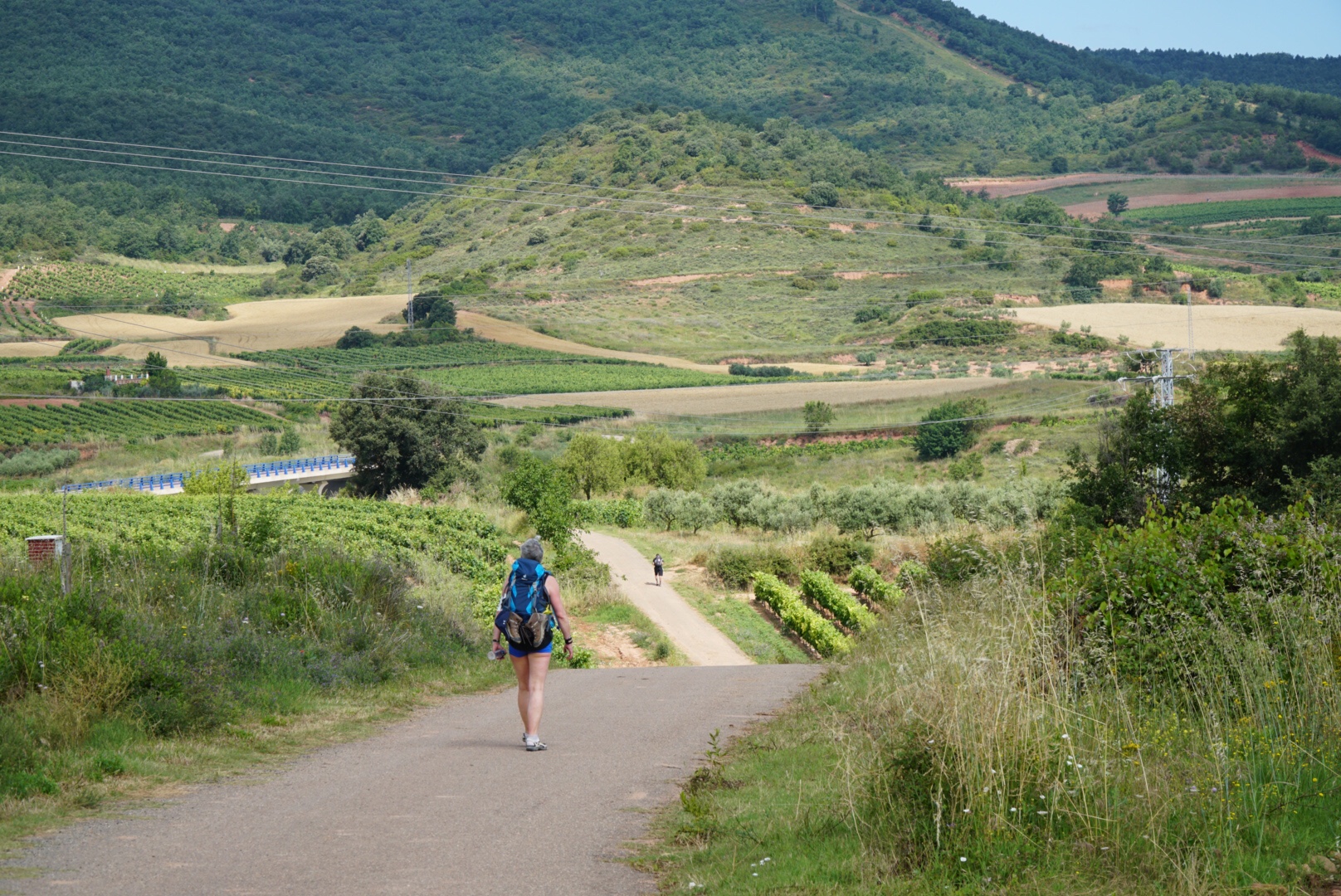
Theresa leading the way in La Rioja on our way to Viana and Logroño.
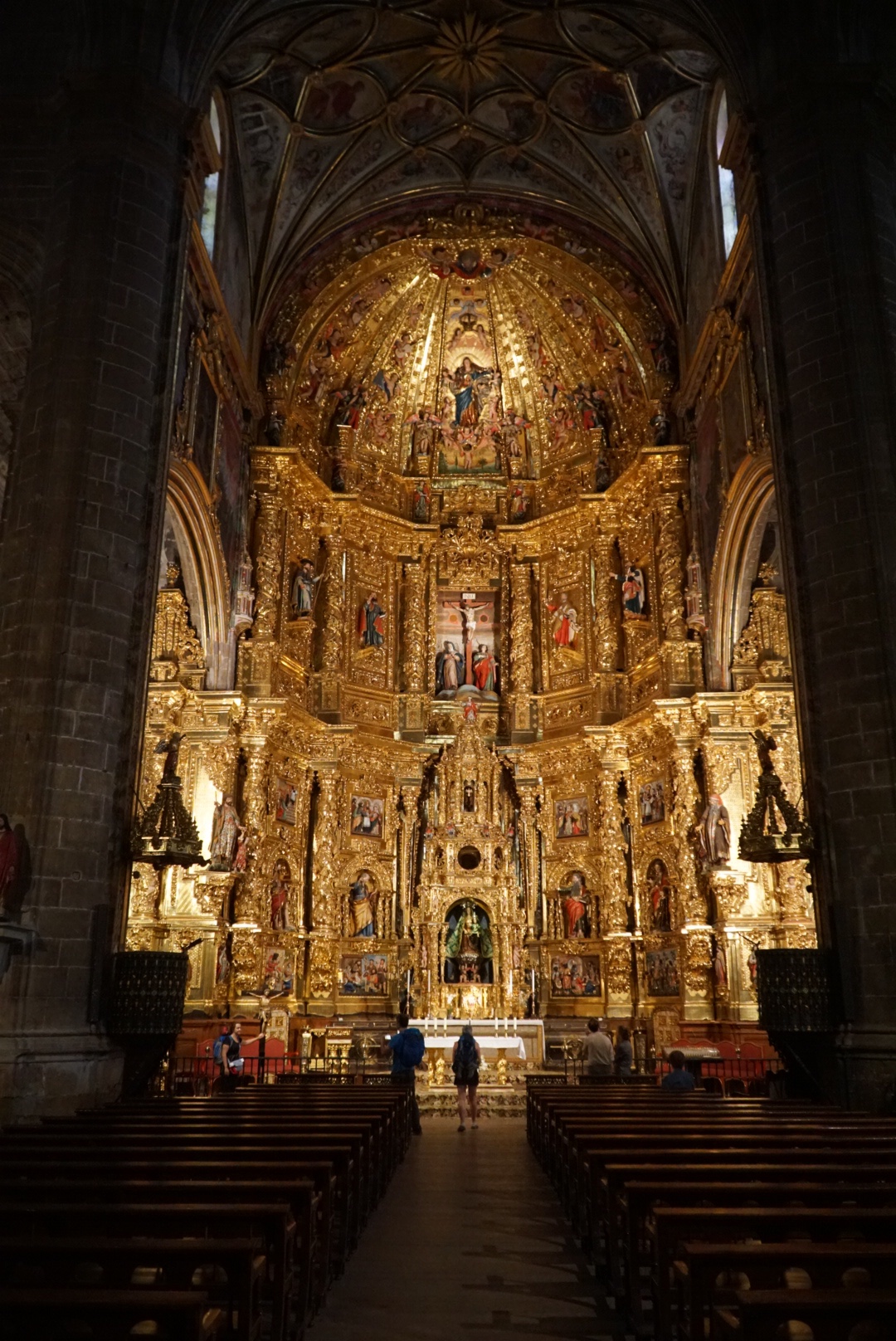
That’s Theresa, standing in awe in front of the retablo of the Navarette church.
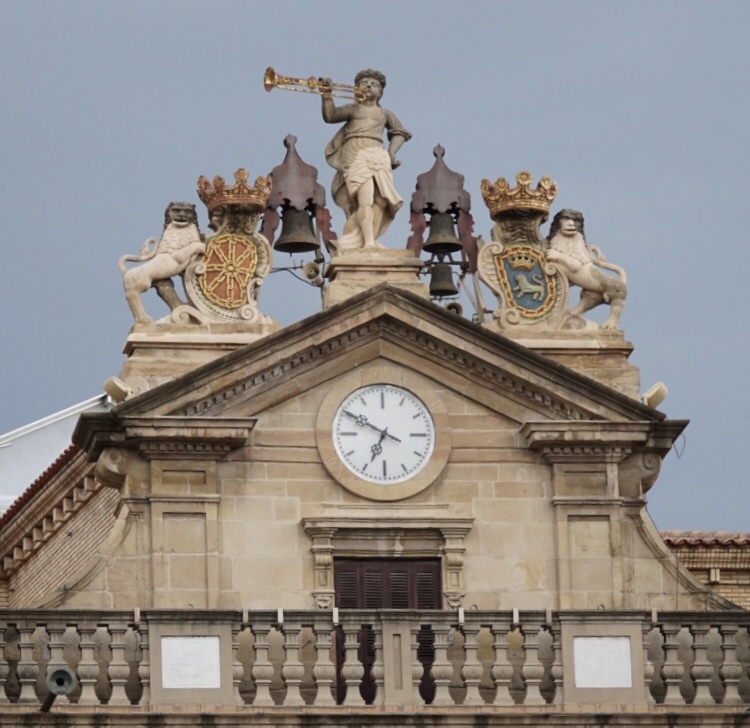
The herald blows a trumpet to the world to let them know how glorious is his town, Pamplona.
Dear friends,
The Way of St Francis guidebook has been a big success, launched into its Second Printing in only 18 months. As with any pilgrim route, changes on the ground require constant updates so that walkers have the most accurate and current information. In September and October 2017 I walked the entire route and was able to verify existing info while discovering some changes of which pilgrims should be aware. Hence the comprehensive updates below.
Many of the edits also come thanks to those who’ve shared their comments and ideas with me over the last years since the book’s original publication. Each of the suggestions has helped to make a better end result and for this help I am extremely grateful.
Check the comprehensive lodging list for complete and current information on lodging contacts.
The GPX tracks for the stage have also been carefully edited and updated. Please make certain to use the tracks files marked “2018” when you download them from Cicerone Press.
The Via di Francesco/Way of St Francis is a wonderful pilgrimage walk for those looking to be immersed in nature, Italian culture and cuisine, and some of Italy’s most amazing historical sites. Enjoy!
– Sandy Brown
Key: All text in black updates the 2015 printing. These updates are already included in the 2017 printing. Text in red updates both the 2015 and 2017 printing. Green text updates the 2017 printing.
Introduction
The Modern Way of St Francis
Getting There
Getting Around
Pilgrim credential and testimonium
Go to the website: http://www.piccolaccoglienzagubbio.it and download the credential application form. Fill it out and either send the completed form via email to credenzialedelpellegrino@gmail.com or by mail to:
Piccola Accoglienza Gubbio
via Baldassini 22
06024 Gubbio PG, Italia
This wonderful service is run by volunteers, who send credentials out each week. Make sure to show your address exactly as it should appear to be correctly mailed by your national postal service. Allow 6-8 weeks for delivery.
It is also possible to secure a credential in person at the Pilgrim Office adjacent to the Lower Basilica di San Francesco in Assisi. By the time of publication credentials should be available at St James Episcopal Church in Florence (Via Rucellai 9, 055 294417).
Maps, GPS and Waymarking
Accommodation
Business Hours and the Riposo
When to Go
(New Section) Water Fountains
Training
Discovering Florence
Stage 1 – Florence to Pontassieve
Stage 2 – Pontassieve to Consuma
Stage 3 – Consuma to Stia
“After a creek crossing on stones, take the wide gravel road to the left, following it for 500m until it reaches small farms and then another 600m as it becomes a paved road. Views to the left include the Convent of Santa Maria della Grazie built in 1432 to mark an apparition of the Virgin Mary. Continue on this road, the Strada Comunale di Sassi Bianchi, turning left at the first intersection. Continue on this quiet country road, now the Via Londa, walking its switchbacks downhill.
At a bridge with low stone walls cross the headwaters of the Arno River. At the stop sign turn right onto a paved, two lane road. Continue on past the furniture factory and just after the Via Dante Alighieri/Castello Porciano signs on the left, turn right at the “Firenze 49” sign onto the Via della Campo Sportivo for a 400m shortcut down to a soccer field at the valley floor. At the far end of the field and before the parking lot turn left following the sign marked “Centro Storico” up a stairway and along a covered alley to the picturesque town square of Stia. Here you’ll find many of the town’s shops, bars and restaurants as well as the Santa Maria Assunta church, where today’s stage ends.”
Stage 4 – Stia to Camaldoli
Stage 5 – Camaldoli to Badia Prataglia
Stage 6 – Badia Prataglia to Santuario della Verna
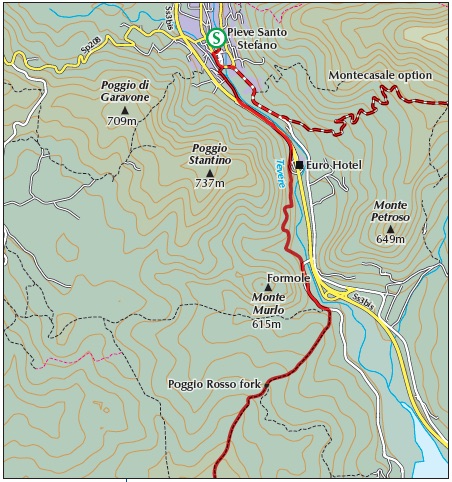
Stage 7 – Santuario della Verna to Pieve Santo Stefano
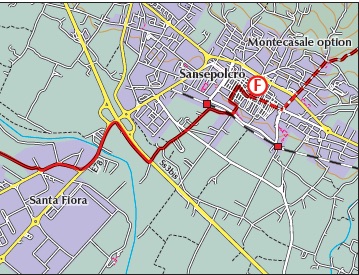
Stage 8 – Pieve Santo Stefano to Sansepolcro
At the first freeway underpass, cross beneath and head up the driveway to a house and outbuildings. Walk past the house and continue on through the gate. Soon the two-track road passes a clear-cut section of the forest and becomes a single-track pathway. When it reaches the gravel road, turn left.
“Turn right here and continue 400m to the concrete bridge across an arm of the Lago Montedoglio reservoir (10.5km). Cross the bridge and continue on the quiet country road, disregarding the markings that have you turn off the road. After 2.9km come to an intersection with the SP 47 road. Turn left and follow the road downhill into the tiny village of Motina. Take the first left at the charming stone building toward Le Vignacce and then take the first right, noting the CAI marker and arrows on the utility pole next to the gravel road.” Now you are atop a Levee…..
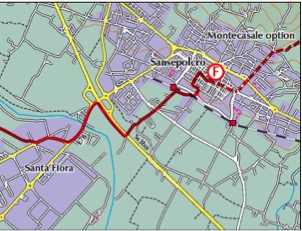
Stage 9 – Sansepolcro to Citerna
Stage 10 – Citerna to Città di Castello
Stage 11 – Citta di Castello to Pietralunga
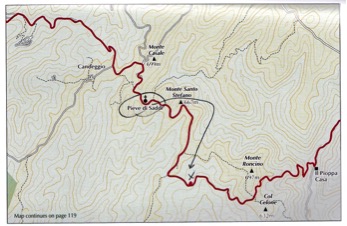
Stage 12 – Pietralunga to Gubbio
Stage 13 – Gubbio to Biscina
Stage 14 – Biscina to Valfabbrica
Stage 15 – Valfabbrica to Assisi
Stage 16 – Assisi to Spello
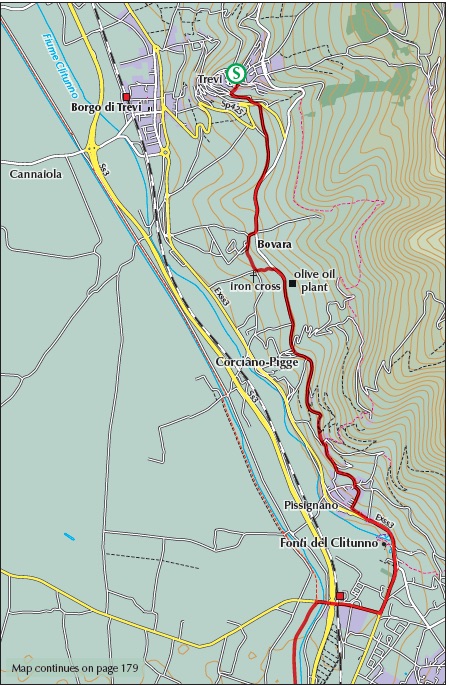
Stage 17 – Spello to Trevi
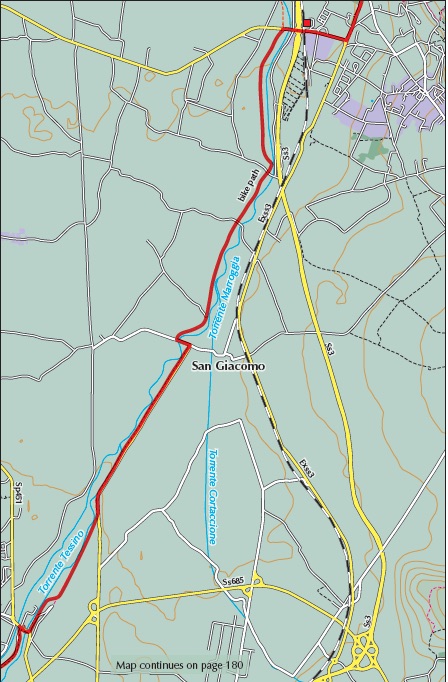
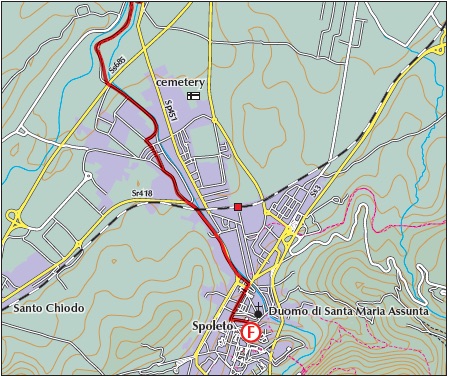
Stage 18 – Trevi to Spoleto
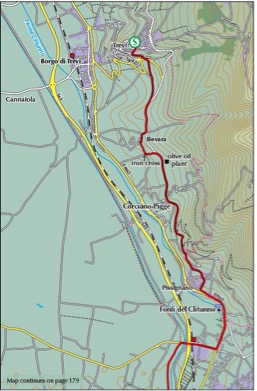
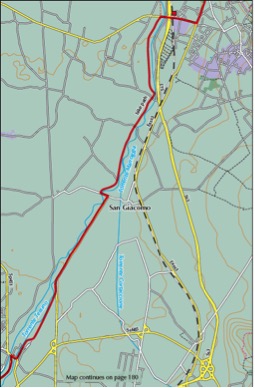
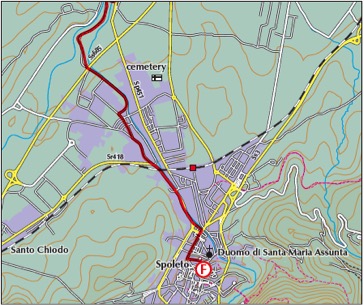
Stage 19 – Spoleto to Ceselli
Stage 21 – Arrone to Piediluco
Stage 22 – Piediluco to Poggio Bustone
Stage 23 – Poggio Bustone to Rieti
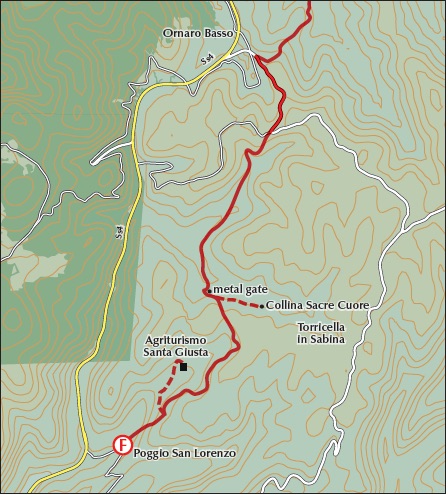
Stage 24 – Rieti to Poggio San Lorenzo
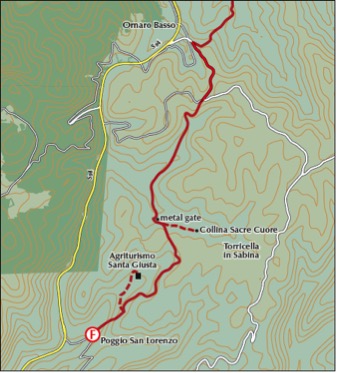
Stage 25 – Poggio San Lorenzo to Ponticelli
Stage 26 – Ponticelli to Monterotondo
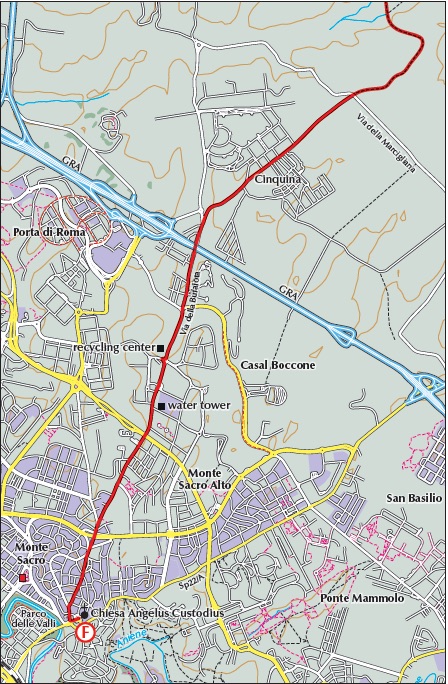
Stage 27 – Monterotondo to Monte Sacro
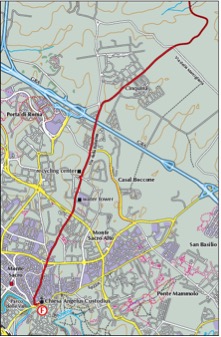
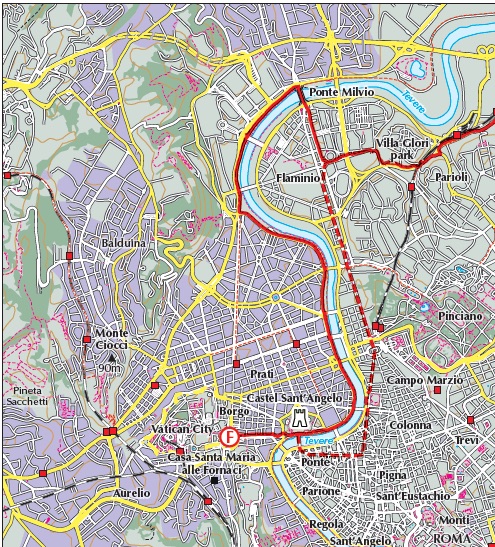
Stage 28 – Monte Sacro to Vaticano
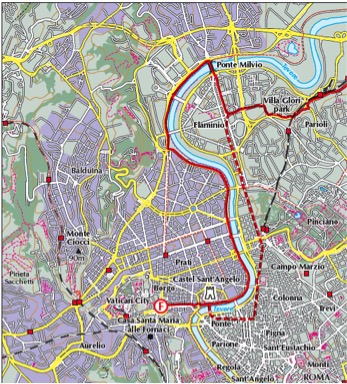
With the updates in the second printing of the Way of St Francis: From Florence to Assisi and Rome there are many who are left with the original printing who don’t have the second printing updates. Here’s a post that fixes that, sharing the most important updates between the first and second printing. This update is also available in PDF form here Way of St Francis Updates-2017a.
Piccola Accoglienza Gubbio
via Baldassini 22
06024 Gubbio PG, Italia.
This wonderful service is run by volunteers, who send credentials out each week. Make sure to show your address exactly as it should appear to be correctly mailed by your national postal service. Allow 6-8 weeks for delivery.
It is also possible to secure a credential in person at the Pilgrim Office adjacent to the Lower Basilica di San Francesco in Assisi. By the time of publication credentials should be available at St James Episcopal Church in Florence (Via Rucellai 9, 055 294417).
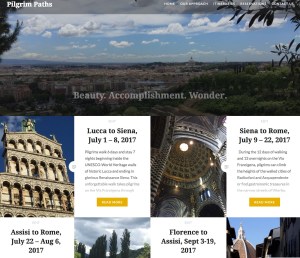
My new Pilgrim Paths website which was so much fun to put together with photos of prior Italian caminos.
Over the past months I’ve been having a blast as I start a trekking business and plan five big walking itineraries in Italy during the 2017 season. It’s part of a dream to help people enjoy great pilgrimage experiences like those with which I’ve been blessed over the last many years.
These long adventures have changed me in so many ways. They helped me build lifelong friendships, they’ve sent me back to school to learn Spanish and Italian, and they’ve changed my outlook on the world. It’s the effect of “slow travel” where it’s not just the sights, it’s the sounds, smells and tastes of each new village or valley.
So what’s fun about 2017 is I’ll get to walk all summer! And with other pilgrims, too! And with my son, Luke, who’ll be our driver and baggage genie. It’ll be a few hundred kilometers — and that’s part of the fun. The distances look like this:
| Kilometers | Miles | |
| Lucca to Siena (Via Francigena) | 128.5 | 80.1 |
| Siena to Rome (Via Francigena) | 276.4 | 171.7 |
| Assisi to Rome (Via di Francesco) | 249.8 | 155.1 |
| Florence to Assisi (Via di Francesco) | 282.4 | 175.4 |
| Assisi to Rome (Via di Francesco) | 249.8 | 155.1 |
| Total | 1,186.9 | 737.4 |
The most I’ve walked in one summer was 900 km in 2011, but what makes 2017’s agenda possible is that the third and fourth walks are separated by a month long vacation with friends in Umbria. When it’s all done I expect to be a little weathered, in great shape, and excited — like after every trek I’ve ever done.
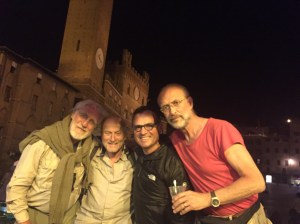
I still owe these friends a visit. We met walking to Siena last year and became great friends.
Biggest of all is the excitement of walking with pilgrims from around the US and the world. So far, my pilgrim clients include walkers from the states of Washington, Florida, California, Rhode Island, Georgia — and New South Wales, Australia. I’m looking forward to knowing them, hearing their stories, and enjoying our many days’ walks together.
It’s been quite a learning experience to start this new business. I had to get a Federal Employer Identification Number, a Washington State Business License, business bank accounts, set up an international wire transfer account and get a license to sell travel insurance which required I be fingerprinted! All part of the fun.
Of course, you’re invited to join me on any or all of these great walks. Our final itinerary, Assisi to Rome in Sept/Oct, is completely booked, but there’s room in each of the others. You can learn more by visiting my website at www.pilgrimpaths. net. I’ve made photographs a big part of the site and I hope you like it.

 Caminoist