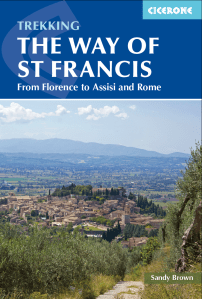
2015 Updates complete for The Way of St Francis guidebook

Here's my itinerary - by car and train - to update the Way of St Francis guidebook this month.

Here’s my itinerary – by car and train – to update the Way of St Francis guidebook this month.

I’m just back after spending three weeks (Nov 18-Dec 8) researching updates to The Way of St Francis: From Florence to Assisi and Rome. It was great fun to retrace my 2013 and 2014 footsteps, but this time with a car. During the three weeks I revisited almost every town on the itinerary as well as several important Franciscan sites I hadn’t had the opportunity yet to visit, such as Montecasale, Greccio, Fonte Colombo and Montefalco.

The result is a link on the Cicerone website update page that includes helpful new information on several parts of the walk:

  • Introduction to Florence – more info on visiting the Basilica of Santa Croce
  • Stage 2: Consuma – lodging update
  • Stage 6: Santuario della Verna – more information on pilgrim accommodation
  • Stage 8: Pieve Santo Stefano – Montecasale update
  • Stage 10: Entry update to Citta di Castello
  • Stage 12: Gubbio – additional visit info
  • Stage 13: Biscina – new hostel for pilgrims!
  • Stage 15: Assisi – scheduling information, pilgrim office info
  • Stage 17: Foligno – new accommodation
  • Stage 18: New entry info to Spoleto, including revised GPX track
  • Stage 21: New entry to Piediluco, including revised GPX track
  • Stage 22: Clarification after Labro, clarified approach to Poggio Bustone and new GPX track
  • Stage 23: Rieti – new accommodation
  • Stage 24: Poggio San Lorenzo – new accommodation, including info on a convent and hostel
  • Stage 25: Ponticelli – new agriturismo
  • Stage 26: Montelibretti – new accommodation; Monterotondo – new accommodation information at the Duomo
  • Stage 27: Monte Sacro – new accommodation

Ideally, people will access the update page and carefully replace old information with new before taking the walk. Here’s a direct link to the new info also: WayofStFrancis2015updates (pdf).

As always, many people contributed to supply information, including Gigi Bettin, Salvatore Accardi, Rita Giovanelli and  others. Also, it was great to meet up with friends like Feliciano, Alec, my language teachers at Comitato Linguistico and Graziella. I enjoyed making new friends, too, like Jorge Fernandez and Simone Minelli. And as always Jacqueline Zeindlinger had important suggestions. Thanks, all, for your help!


An Italian sojourn to update “The Way of St. Francis”

After the book launch in London on November 5, Theresa, Madison and I headed to France for a holiday. On the 18th I put them on a plane at Charles DeGaulle airport and headed down to Italy to research updates for The Way of St Francis and check in with Italian friends. As I write, I’m in an Airbnb apartment near Castel Ritaldi, more or less near Trevi, and am nearing the end of my work.

Here are a couple things I’ve learned about the Via di Francesco while here in Italy:

  • More pilgrims are walking this trail — Everyone agrees that they’re seeing more pilgrims. Simone Minelli in Gubbio counted over 2,500 helped by his organization this year. Feliciano in Poggio Bustone himself housed over 1,500 pilgrims. That’s great news for the trail. More pilgrims means more infrastructure as people come to recognize it for the delight it is. According to Feliciano, it is mostly German, Dutch, Austrian and French pilgrims. Just a few Americans and no English. Let’s fix that!
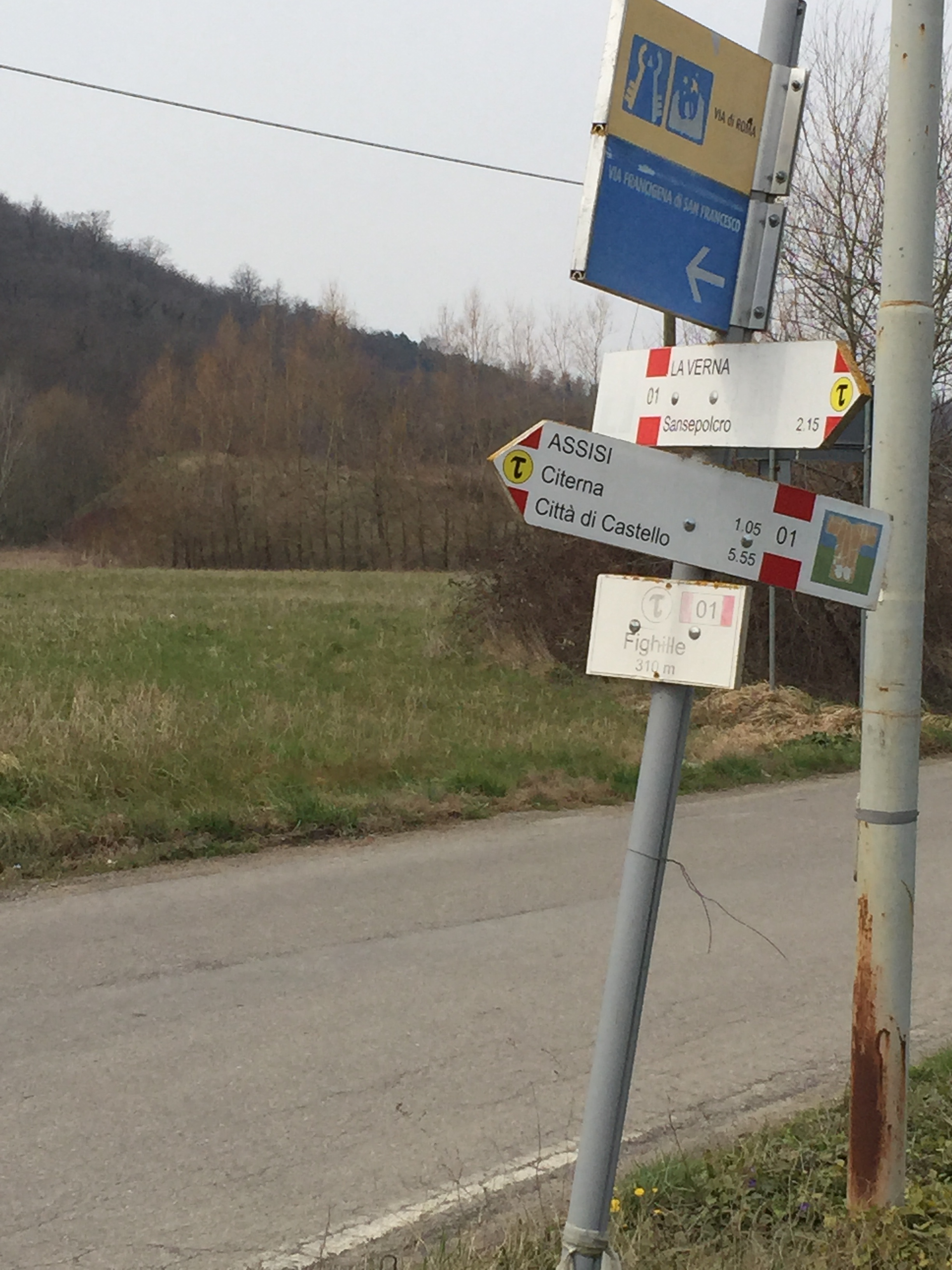
  • Signage is improving — The Region of Lazio has made an investment in new signs, and according to Gigi Bettin Umbria is not far behind. Today I saw sparkling new signs pointing the way along the Holy Valley of Rieti walk, now being identified by Lazio as part of the “Via Francigena di San Francesco” and “Via di Roma” group. In a couple of days I’ll investigate whether trail maintenance has improved south of Rieti.

St Francis draft cover.jpgMy book updates will soon be posted to the Cicerone update site. So far I’ve put together a new and improved description of the approach to Poggio Bustone, recorded the new entry to Piediluco, updated accommodation for Consuma, Santuario della Verna, Sansepolcro, Foligno, Ponticelli, Montelibretti and Monte Sacro.

In between updates I’ve rented a car and explored a bit, something that’s not so easy when you’re on foot as I’ve always been while on pilgrimage. So I’ve now added some Franciscan sites to my repertoire, including Montecasale, Montefalco, Greccio and Fonte Colombo. With those done, I’m pretty sure I’ve now visited all the major St Francis sites in Italy.

It was great to see friends like Alec who hosted me overnight in 2014. I checked in with Chiara, Gigi and Beatrice in Perugia and while there had a chance to visit Comitato Linguistico (my language school) and my house mother, Graziella and her son, Luigi. I really enjoyed meeting Bret and Catia and their two kids in Loreto for an American Thanksgiving dinner.

I also connected with the people of Italy Magazine who’ve agreed to publish a couple of articles from me in the next months. I’m about halfway done with research on two articles and I have an idea for a third, so some writing to do yet.

The best part of this trip, though, has been getting to see some of the friends I’ve made over these couple of years of visiting and writing in Italy. I’ve put together a slideshow below of people and places I’ve seen so far. Just one week left in Italy, then it’s back to Seattle. I love this place, but I miss Theresa, my boys and my home town.

Book launch in London brings Italy, UK and America together to promote the Via di Francesco

Presenting The Way of St. Francis at its launch party in London, 5 Nov 2015

Presenting The Way of St. Francis at its launch party in London, 5 Nov 2015

Late Tuesday night, November 3, Theresa, Madison and I jumped on a plane to London to join in the book launch for The Way of St. Francis. After a long flight via Chicago and a short night in our London hostel I dragged myself out of bed and onto the Tube to do a quick drive-time radio interview with Premier Christian Radio. Then it was off to the book launch with Stefan Karol of Karol Marketing who was handling the event.
Radio interview for Premier Radio's drive-time show.

Radio interview for Premier Radio’s drive-time show.

We arrived early and after a cup of coffee at a nearby Starbucks (it’s hard to actually leave Seattle), we headed to Foyles Bookshop, which turned out to be a perfect venue for the event. Atop five floors of books is an ample conference room, looking out through a glass wall to a comfy bookstore cafe a half-story below.

While Stefan’s staffers helped Foyles set up the room I peeked out toward the bookstore’s cafe and was delighted to see the arrival of the Italian contingent of Gigi Bettin, Chiara dall’Aglio, Beatrice Morlunghi, and Bishop Paulo Giulietti. I’d never met Beatrice, who was instrumental in arranging the event, and it had been 17 months since I’d seen Gigi, Chiara and now-bishop Giulietti, so we exchanged many hugs and lots of laughter and joy.

The event would not have happened without the strong support of Chiara, head of marketing for Sviluppumbria, the economic development agency of the Region of Umbria, Italy. Sviluppumbria sees the Via di Francesco pilgrimage route as an important program that will drive tourists and visitors to Umbria. Chiara, Gigi and I had met over Proseco one afternoon in the summer of 2014 in the old town of Perugia while I was researching the guidebook. Gigi had already been helpful in consulting with me on its itinerary, and Chiara immediately climbed aboard the project, saying that afternoon to Gigi and me, “Let’s help market this.” True to her word, Chiara set up the entire launch, made possible with Svilluppumbria sponsorship, and planned it to work with my schedule and to coincide with the Nov 2-5 World Travel Market in London.

It’s hard to imagine a better event.

From left, Gigi Bettin, Chiara dall'Aglio, Beatrice Morlunghi and the Very Rev. Paulo Giulietti.

From left, Gigi Bettin, Chiara dall’Aglio, Beatrice Morlunghi and the Very Rev. Paulo Giulietti.

After my reunion with the Italians, Jonathan and Lesley Williams of Cicerone Press arrived. Jonathan is publisher and overseer of the print project, and Lesley is marketing director of the family-owned company that now boasts over 350 guidebooks covering outstanding hikes, treks, climbs and pilgrimages around the world. Jonathan had given The Way of St Francis the green light back in December 2013, nearly two years ago, and Lesley had overseen the UK participation in the event, working with the Italians and the UK pubic relations team to ensure its success. With their arrival we were ready to begin.

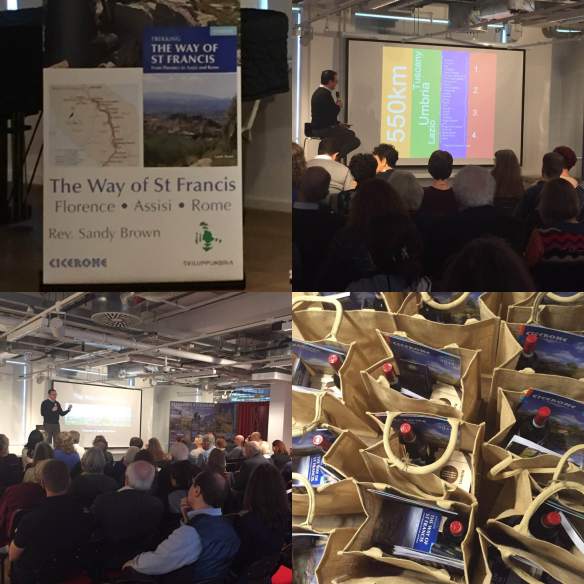
By 11:00 a group of 60-70 journalists and student journalists had arrived in the upstairs conference room that by now was set up with display banners, gift bags stuffed with Umbrian delights, a video screen and projector, and ample copies of the book. Jonathan introduced Cicerone Press and the book, I spoke for 30 minutes about the Via di Francesco and the book project, then I was followed by Mauro Agostini of Sviluppumbria and finally by Don Paulo Giulietti, who oversees the consortium of public, private and religious organizations that run the Via di Francesco. Afterward I answered press questions and signed complementary copies of the book for attendees.

Slide detailing distance, regions, stages and sections of the Way of St Francis (Via di Francesco)

Slide detailing distance, regions, stages and sections of the Way of St Francis (Via di Francesco)

After the launch, Theresa, Madison and I were treated to lunch by Jonathan and Lesley. Then Theresa and Madison, exhausted from the flights, headed back to the hostel for a rest before dinner. I took a quick walk to Trafalgar Square to catch some air (and try to remain awake) then met Jonathan and Lesley again to discuss the book over drinks with leaders of the British Confraternity of St. James, the organization that supports pilgrims walking the Camino de Santiago de Compostela. Gosia Brykczynska, Sheila and Russell McGuirk and Alyson Raju joined us for a lively discussion. Sheila, Russell and Gosia had walked from Assisi to Rome last year, so they were thrilled to share their experiences. I asked many questions about details of their walk and they later sent notes with accommodation information — one of the important aspects of ongoing research about this still-developing pilgrimage.

Sandy-Brown-Theresa-Elliott-Madison-Dizon-Tower-London

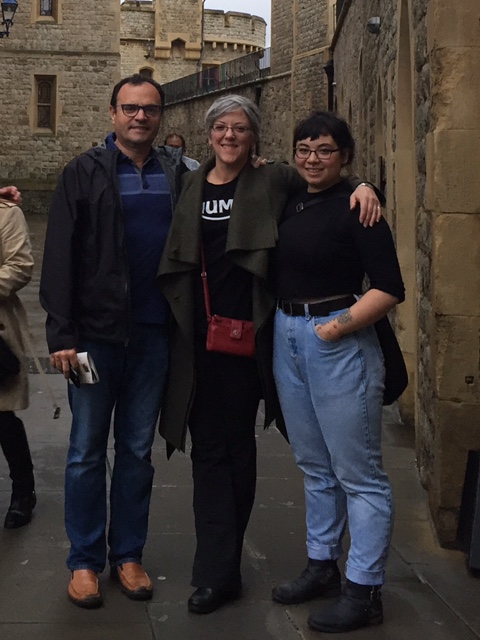
Theresa, Madison and I tour the Tower of London the next day.

A now-rested Theresa and Madison rejoined Jonathan, Lesley and me, along with their daughter Maddie, over a delicious dinner at the Pig and Goose Restaurant atop The George Pub in the Blackfriars neighborhood. By the time dinner was over I was beginning to fade — too many flights, interviews, talks and walks. I went to sleep, though, knowing that the book had received a serious and splashy launch and was well on its way to becoming known as a worthy and welcome guide for pilgrims on the Via di Francesco.

Heading into the weekend, Theresa, Madison and I would welcome my camino friends — Sebastian, Martin and Jacqueline — for a tour of London sights. We all welcome the opportunity to relax and enjoy life a little after a whirlwind book launch.
sandy-brown-way-st-francis

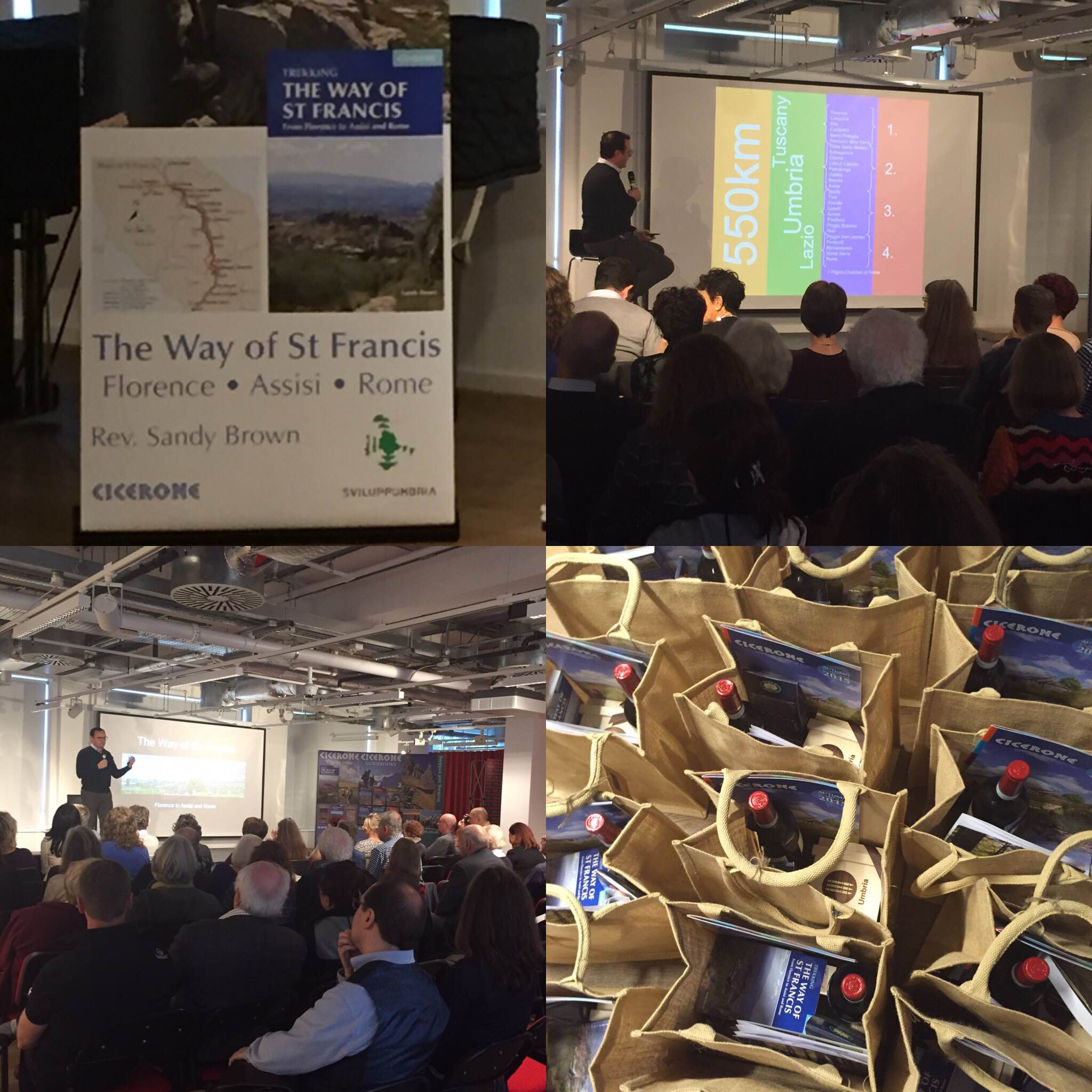
Clockwise from upper left: Banner for the event; me with the overview slide; gift bags with wine, complementary book and Umbria delights; me introducing the book.
Donna Jones’ Report on her 2015 Way of St Francis

Donna Jones walked the Way of St Francis (Stia to Rome) mid-March to mid-April 2015 and has these notes to share with future pilgrims –Sandy

2015-03-18 09.47.52

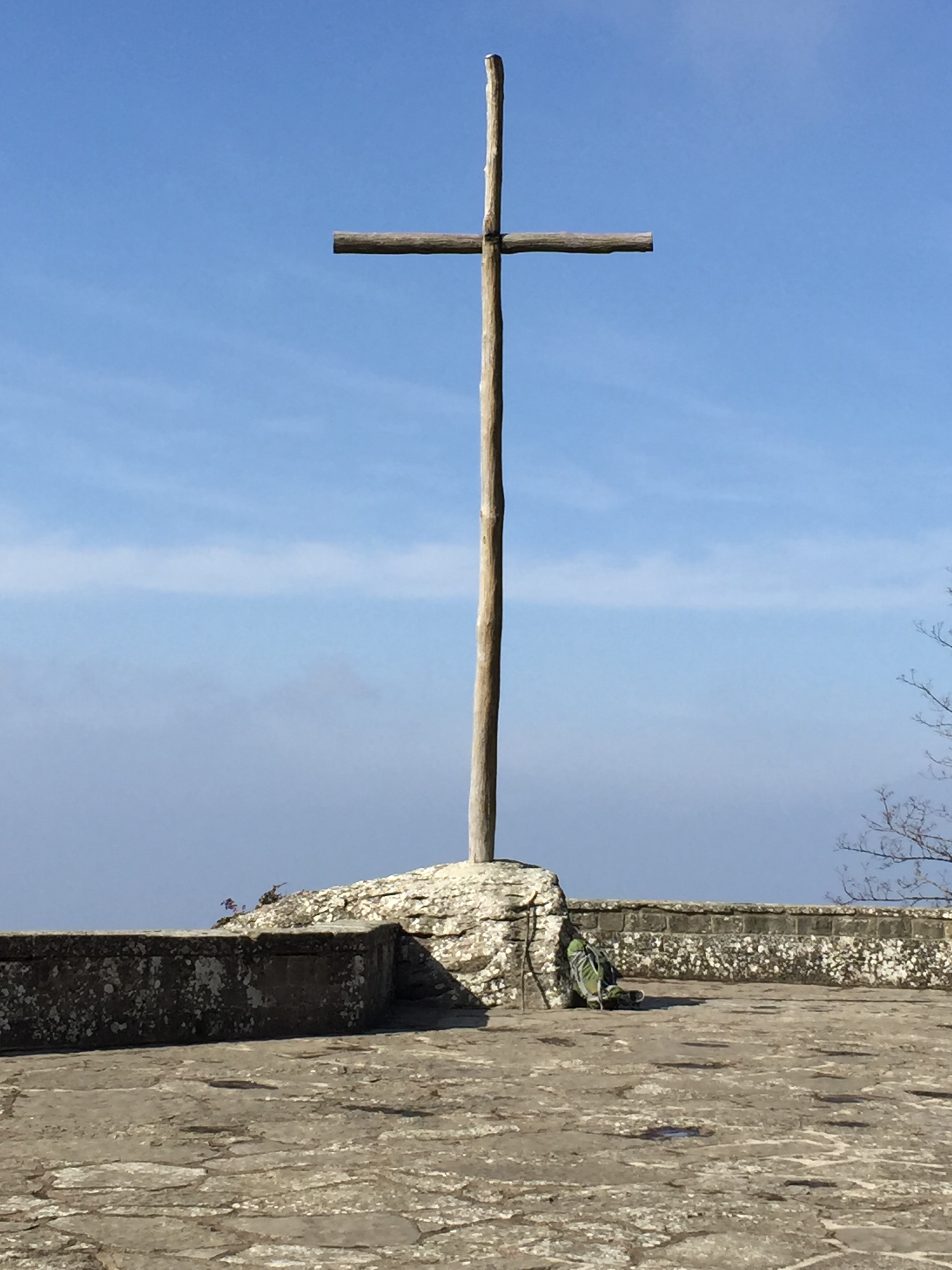
Overlook at Santuario della Verna

I have recently returned from nearly 4 weeks walking the Via di San Francesco. This was my first camino so I will not be able to compare it to the more well known Camino de Santiago. But perhaps a fresh eye on such a beautiful walk will be helpful to others considering or planning it.

First I want to thank Sandy for his willingness to share his experiences and insights with all of us considering this path. And mostly for making us aware that it is possible. Equally important, I could not have done this walk without the kindness, knowledge and support of Salvatore Accardi. Salvatore through his business (Il Mestiere di Viaggiare) helped me identify the best routes and stopping places in this off season for my needs and identified lodging – not so easy when so few places were open. One of the best parts of his support were the GPS tracks he provided which kept me safely on the path despite sometimes, confusing, missing or erroneous signage. I used the app Motion-X GPS on my iphone to keep track.

I mostly followed the stages laid out by Sandy, with some small differences. When I could break a stage into two I took that option, as I wanted to be sure I could do it. I am 59 years old, in reasonable shape but not an athlete and my main form of exercise has jut been walking but not with a pack so I was unsure of what I would be able to do.

Various way marks

Various way marks

For various timing reasons, I did not begin in Florence so missed the first 3 stages of the walk but met a Canadian on the trail who had walked it and enjoyed it. My walk started in the small town of Stia. I walked from mid-March to mid-April and that had important impacts on my walk. Firstly, there was essentially no one else on the trail. I met the Canadian mentioned above who was walking from Florence to Assisi, an Italian who was walking from Sansepolcro to Assisi, a German couple who were walking a somewhat different route from Assisi to Rome and 3 Austrian women who were walking for a week from Assisi to Rieti. That was it for the entire 4 weeks save for my son and husband who joined me for parts of different sections. Being ahead of the season meant quiet times on the trail but also quiet times in some small places that might not have lodging open yet. Because I worked with the wonderful Salvatore, I had lodging somewhere every night despite some hostels and inns not yet open. The other big factor for this time of year is the weather. There were 2 days of walking with snowdrifts in the mountains, beautiful, not too cold but sometimes tricky footing. Mostly however there was water. Though I only had 3-4 days of rain, the rain and the melting snows meant that rivers and creeks were full and some of the stream crossings were not possible, however – there was always a way and that never slowed us for long. The best part of this time of year was that the temperature for walking was wonderful, never too hot or too cold.

Viewpoint at Montecasale

Viewpoint at Montecasale

Admittedly I am a novice and not young but it did not seem is an easy walk but it was wonderful, beautiful, and soul lifting. Most of the paths were wide gravel or reasonable forest paths or very quiet asphalt. Each day I made it to my planned stop in under 7 hours so was safely in daylight even without the summer hours. So many kind people, amazing little towns, beautiful scenery, delicious food, incredible history, and the opportunities to see these little places you would never come to otherwise, walking up to the sites with so much history, to spend time with St. Francis in the rocks and forest and to just be out walking in this beautiful country. So though there were narrow and steep paths with mud or difficult rocky gravel, some busy roads or less than ideal paths to avoid the busy road and markings that were not standard nor always present it was fully worth it.   Good descriptions, good maps and GPS tracks if possible make it very doable though. I never got lost not felt discouraged, only tired at the end of the day, which was just right.

Here are my stages and a little bit about each one and some comments that differ from Sandy’s experience walking in the summer.

  • Stia to Camoldoli – there had been a windstorm a week or so before the trip so there were trees down all through the forest so paths and creeks were sometimes blocked – though we could always climb over or under. At the top as we approached the hermitage – we encountered snow. The hermitage is beautiful and don’t miss the striking Philospher’s Gate. Stayed at Oasi Divini Maestro outside the village of Camoldoli.
  • Camaldoli to Badia Prataglia was a short stage but the snow on the trail and rain made it challenging, although beautiful.

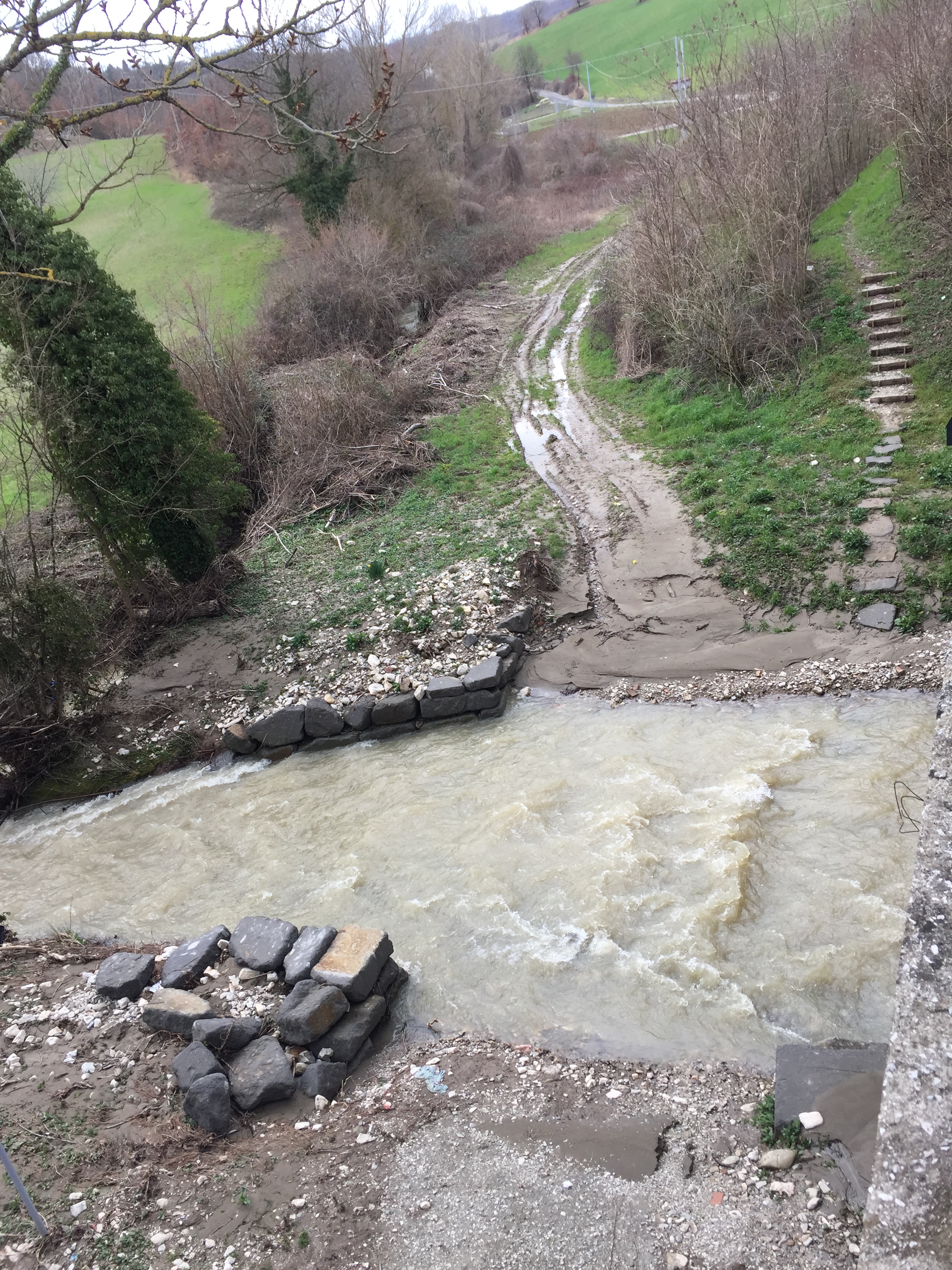
    Impassable stream near Gubbio

    Impassable stream near Gubbio

  • Badia Prataglia to La Verna –The stream to ford in Rimbocchi on CAI 53 was completely impassible so we needed to walk up the road a bit to another marked CAI trail 54 to cross a bridge over the rushing water. This was a nice rocky path that climbed slowly for most of the trip then steeply to join up with the trail 53 near La Verna. Staying at La Foresteria is a beautiful experience and recommended.
  • La Verna to Pieve Santo Stefano – Due to all the trees that had been blown down in the storm – some paths were blocked so we did not take the route through the forest and walked mostly on quiet graveled roads down hill through forest then small towns – lovely.

During the above stages, I was accompanied by Salvatore and I was very grateful for his help on the blocked paths, the impassible rivers and the unknown trail markings. I was ready to head out on my own now.

  • Pieve Santo Stefano to Sansepolcro – Not so pleasant approaching town when passing the sand plant and walking on the edge of the busy road – but this is relatively short and quickly you are off the road and under the highway and into the lovely city of Sanselpolcro. Took my first rest day here so I took the chance to go up to Montecasale– beautiful, peaceful and worth the time to see. I took a taxi up and walked back to town.
  • Sansepolcro to Citerna to Agroturismo La Burgne – lovely and mostly flat until the climb to the Citerna and then down and back up to the Agroturismo. Lovely place with very gracious hosts.
  • La Burgne to Citta di Castello
  • Citta di Castello to Passo Candeggio –The path was badly marked near the beginning – I was saved by my GPS tracks but others wandered for a couple of hours before getting back on the track. The lodging at Passo Candeggio was closed unexpectedly and my Italian was not good enough to understand the phone message. Salvatore saved me here.
  • Passo Candeggio to Petralunga – easy and lovely – up on the ridge mostly
  • Pietralunga to Gubbio – Did this in rain all day – took the full 7 hours but worth it to arrive in that beautiful city
  • 2015-03-27 15.58.41

    Approaching Assisi

    Gubbio to Biscina – came across another stream that could not be crossed so ended up retracing our steps and finding another path on our map that connected eventually to the road to Tenuta La Biscina. Grateful for good maps and GPS.

  • Biscina to Assisi – more rain and some difficult creek crossings but the walk up to Assisi is worth it all
  • Assisi to Spello to Foligno – took the “hard” route out of Assisi which I think is essential. We traveled on to Foligno so that my son who had joined in Citta di Castello could catch the early train.
  • Foligno to Lenano – this takes you up out of the valley – beautiful views – small villages and castles on hill tops
  • Lenano to Spoleto – I always ended up on the “harder” path but was still very doable
  • Spoleto to Macenano – amazing day up to the monastery then through the hillsides – very beautiful
  • Macenano to Piediluco – the waterfall was on lunchbreak when I came through
  • Piediluco to Poggio Bustone – as difficult as advertised but amazing views, the beech tree and wonderful sanctuary/convent at the end
  • Poggio Bustone to Rieti – don’t miss climbing to the top of Cantalice
  • Rieti to Poggio San Lorenzo – 100 km left to Rome!
  • Poggio San Lorenzo – Ponticelli – Chiesa San Vittoria was remarkable.   Stayed at the Agroturismo La Ripa about 3km out of town – wonderful though another climb to get there
  • La Foresta, outside Rieti

    La Foresta, outside Rieti

    Ponticelli to Montelibretti – mostly wonderful fruit orchards and views of hill towns

  • Montelibretti to Monterotondo – beautiful right up until the end. The path is sketchy until you get to the lovely bike/walking path so just need to trust it.
  • Monterotondo to Montesacro – wonderful views of the sheep right up until the urban area arrives
  • Montesacro to San Pietro – better than hoped with lovely last bit long the Tiber

I have many more notes about all of this but really don’t know how much folks need to hear. I am happy to respond to any questions.

“The Way of St. Francis” is now in production phase

Submitting

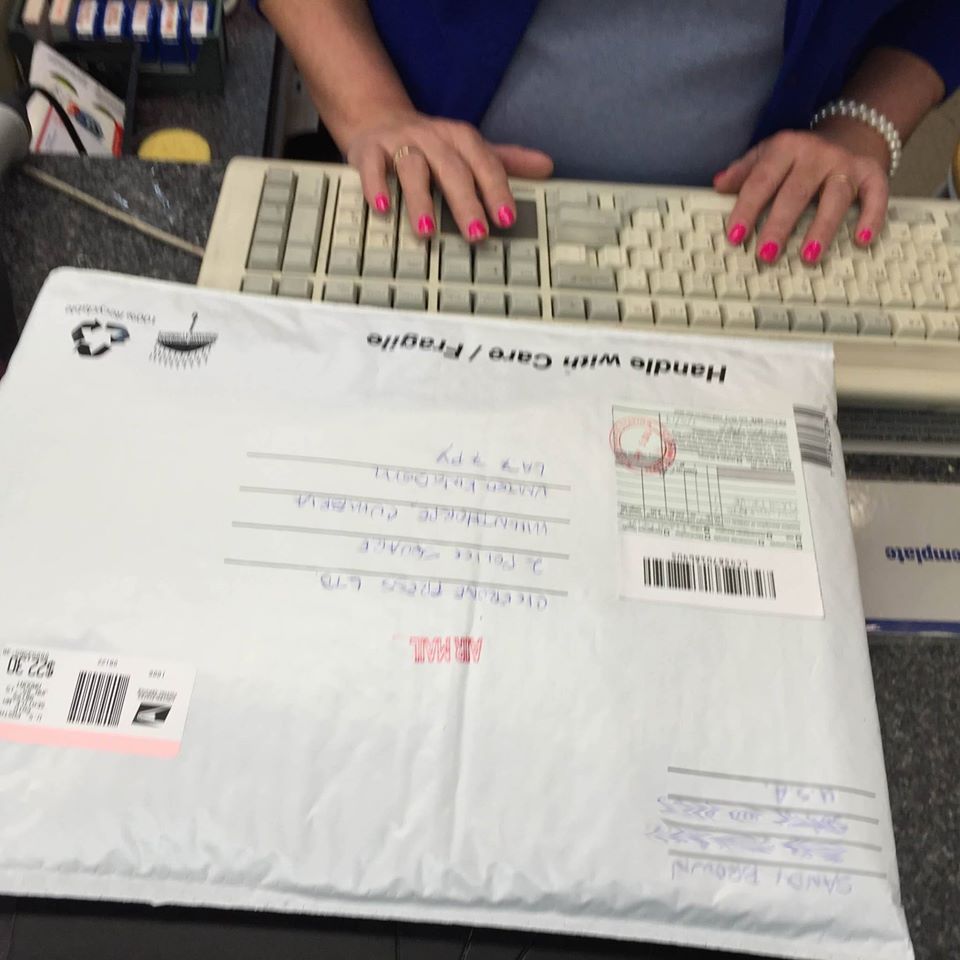
The package containing my manuscript gets mailed to Cicerone Press

When I returned from Italy in September my top priority was reacquainting myself with the amazing Theresa Elliott, but after that my top priorities were beginning my run for Seattle City Council and finishing work on my guidebook, The Way of St. Francis: From Florence to Assisi to Rome. The reunion with Theresa was fabulous. The start of my campaign was smooth (as evidenced by this, this and this). And work on the book was….slow.

I returned from Italy with the basic text of the book’s 29 chapters complete. In September and October I contemplated my approach to the book’s Introduction, and then in November I returned to writing and editing.

It soon became clear that my biggest challenge would be the 40,000 word limit. In fact, by mid-December I was already at 57,000 words. I’d already had conversations about expanding the word limit with Cicerone Press, and they were none too keen on the idea. Long experience taught them that, the longer the book, the less likely people would want to carry it with them in their packs.

So, much of December was a process of culling the book down to its word boundary. A key issue became an extra chapter I’d written that covered the Seven Pilgrim Churches of Rome. The walk had been an eyeopener for me, and I knew people would enjoy a walking guide to these important, historic churches. The last thing I wanted to do was cut this 2500 word chapter.

By the end of the process I’d culled out about 8,000 words and then negotiated a new limit of 50,000 words with Cicerone. Hooray! After some final edits I sent the manuscript in. Here how it worked out by the numbers:

  • 29 chapters
  • 140 photos
  • 29 elevation profiles
  • 6 proposed section maps, plus 29 chapter maps to be supplied by Cicerone

The next step is a thorough edit by a Cicerone editor, followed by editing of the photos and maps. This process takes about six months, with printing encompassing another two-three months. In September the finished book will appear, just in time for people to start planning their 2016 walks.

One of the funnest tasks? Choosing a cover photo. Here’s what Theresa and I chose — actually a photo by Jacqueline Zeindlinger from our 2013 Via di Francesco. If Cicerone approves, this will be the cover pic folks see each time they pick up the book. Thanks to everyone who’s helped make this book a reality.

000

Jacqueline’s photo of me, Sebastian and Andreas walking in fields near Vallericco


New Camino del Norte Guidebook Fills Unmet Pilgrim Need

You may know that I help moderate an Internet Camino forum. It’s a great way to keep abreast of developments in all things Camino. A couple of months ago I found myself gently corrected when I made a bold statement, “There is no good Camino del Norte guidebook in English.”

40138986_8395871

Gérard du Camino’s French guidebook to the Camino del Norte.

I’d shared the results of research in this topic in an article entitled, The Hunt for a Good Camino del Norte Guidebook, in which I compared English, Spanish and French guidebooks. In advance of my 2012 Camino del Norte, after comparing what was available in languages I might understand, I dusted off my 5 years of high school French and bought Le Chemin du Nord, by Gérard du Camino. It proved to be a great choice — very thorough directions, maps, and accommodation info.

The problem, of course, is: what if you’re an English speaker who doesn’t understand any French?

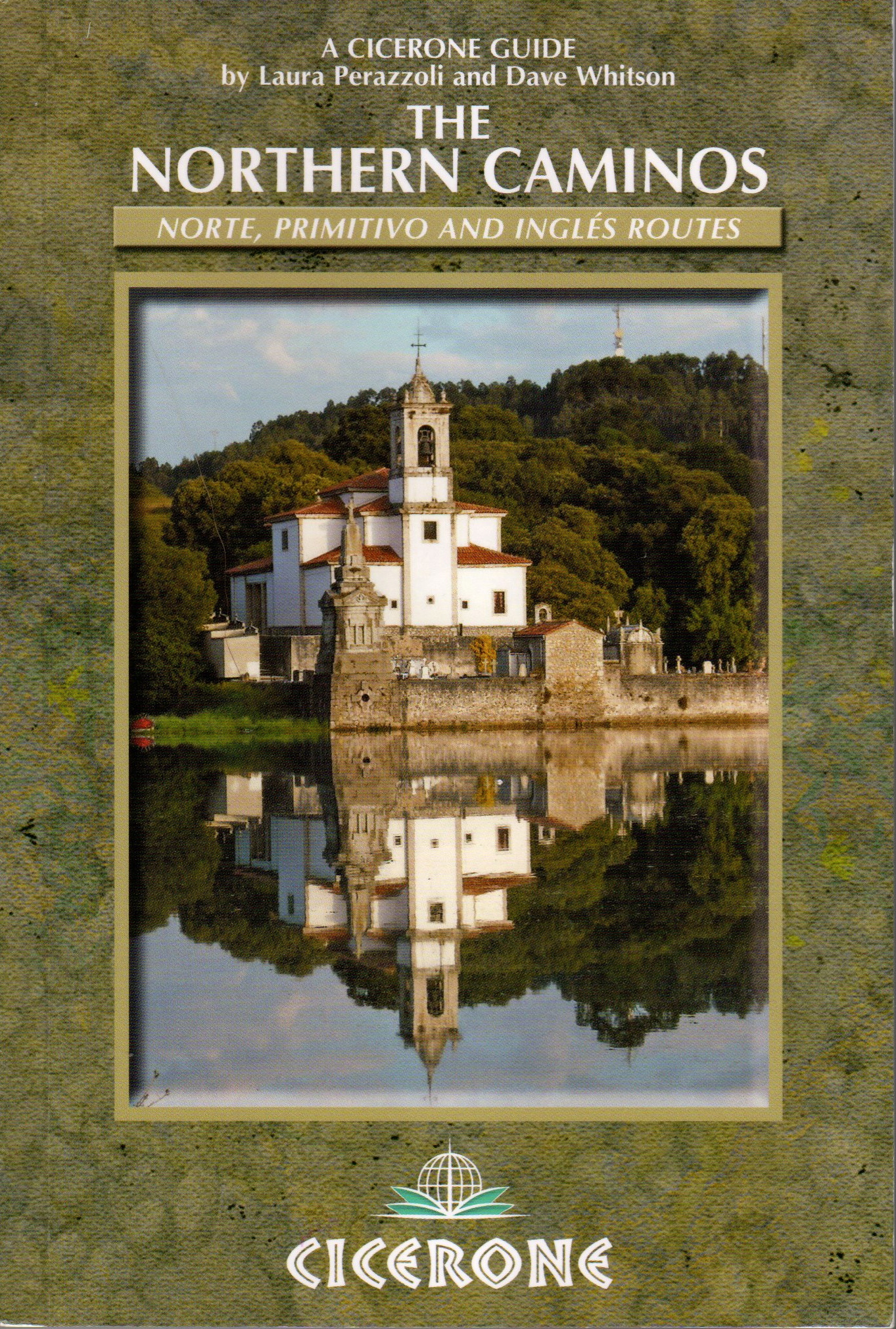
Enter a new book, The Northern Caminos, by Dave Whitson and Laura Perazzoli. It was Whitson who noticed my Camino Forum post and alerted me to his new creation. After reviewing this new guide, I’m pleased to say a pressing need has been met. Whitson and Perazzoli have created a guidebook that will be a big help to English readers who choose the Northern caminos of the del Norte, Primitivo, and Inglés. The guide offers real to-scale maps (hear us, O John Brierley), good historical and cultural background, and a warm and readable style that quietly assures pilgrims that they’re in good hands.

Cicerone-delNorte001

Whitson and Perazzoli’s new guidebook to the Northern pilgrimage routes to Santiago.

That’s not to say I fell in love with this guidebook. There are a few details that I hope will be amended in a second edition. One of the most helpful planning tools a guidebook can offer is a chart of each day’s elevation profile. It’s a big help to know when you’re just about to reach an 800 meter climb, or when you’ve finished your ascent and can rest and prepare for the climb down. Unfortunately, this guide offers scant elevation help, giving only total ascent and total descent stats for each day.
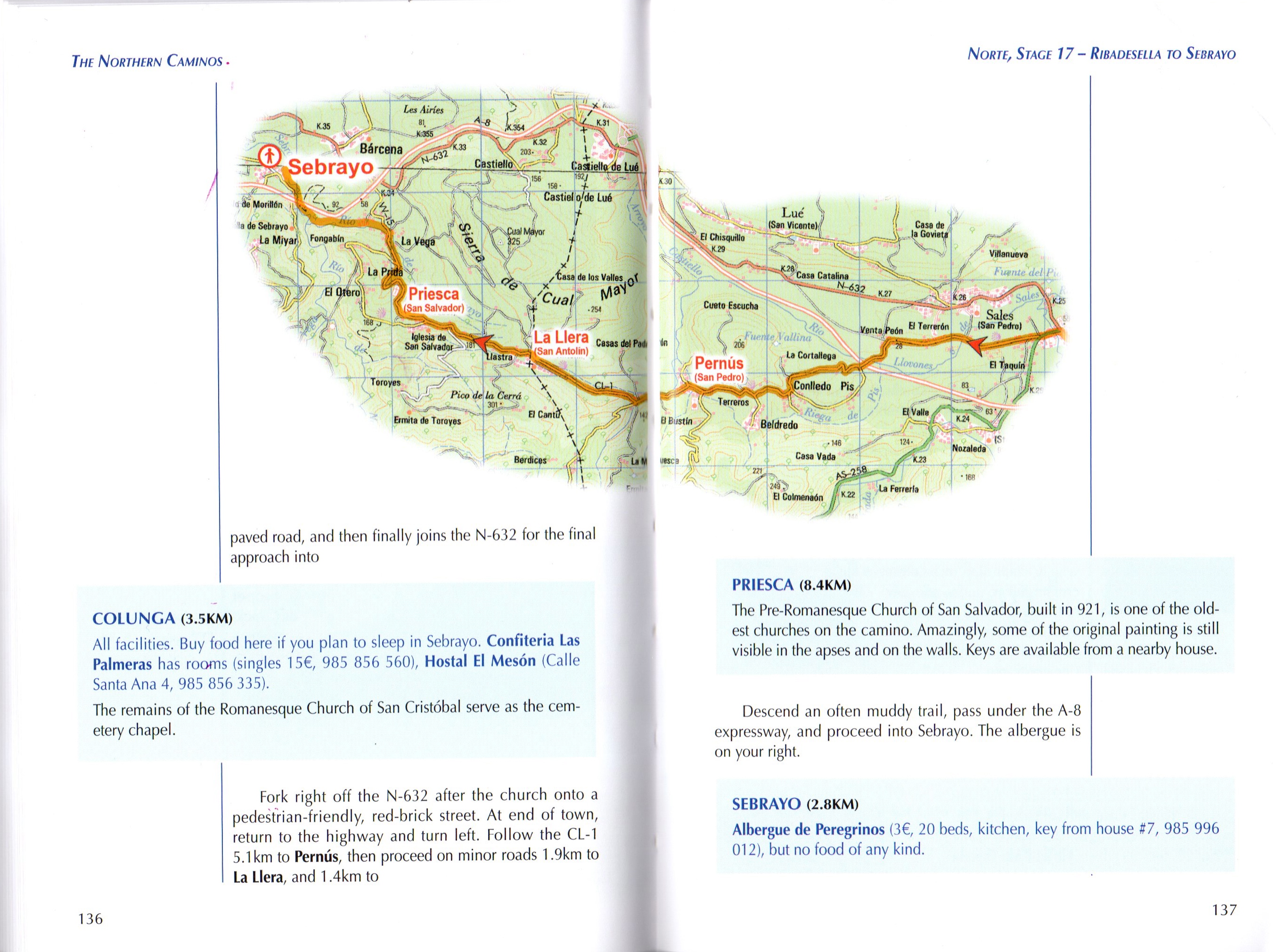
The authors’ descriptions can be so sparse as to be unhelpful. The Ribadesella to Sebrayo stage, a 31.5 km march that ends disturbingly at the Sebrayo albergue that has no grocery store or restaurant nearby, is a good example. A word of warning about this important detail at the beginning of the chapter could be very helpful for pilgrims. Instead, we learn in the chapter’s last phrase: “Sebrayo: Albergue de Peregrinos …. but no food of any kind.” In contrast, the French guide warns upfront that “revitaillement” (resupply) must happen at Ribadesella.

(In truth, I discovered in 2012 that there’s a grocery truck that stops by the Sebrayo albergue each evening to provide pilgrims necessary ingredients for assembling dinner in the albergue’s kitchen. Also, after a walk of about 1.5 km across a small valley to the road behind the albergue pilgrims will find a bar/cafe happy to serve a simple meal.)

Cicerone-delNorte005

Lots of blank space on many pages.

A mildly annoying feature of this new guide is the rather generous use of white space. When a person is carting a camino guidebook across hundreds of miles it’s great to know it’s jam-packed with as much info as possible per kilogram. Hopefully the next edition will ditch the artsy white space and fill it instead with other helpful content  that pilgrims would rather carry.

There are a few other quibbles. I’m not sure why the book’s La Caridad to Ribadeo Stage (p. 168 ff) recommends a southerly route through Brul rather than a route to Tapia that would follow the scenic coastline through Santa Gadea toward Ribadeo. Whitson and Perazzoli suggest that the waymarking is not sufficient, but their book could provide a detailed description that would adequately guide a pilgrim even without excellent way marks through an uncomplicated coastal walk. On this stage I’d certainly take the Tapia option and then follow the coastline toward the Ribadeo bridge.

Flaws? Well, sure. But these guidebooks are often revised in subsequent editions, and they become better and better over time. What we have now is a very good start, and Whitson and Perazzoli are to be commended — and thanked — for a great contribution to the needs of English-only del Norte pilgrims.

Getting a Testimonium at the Vatican is Fun (but not easy)

When a person arrives in Santiago de Compostela there’s not much confusion about how to get the “Compostela,” the completion certificate issued by the Cathedral Office. Pilgrims go to the special building near the cathedral, stand in line, present their credential, are asked a few questions, and then are issued their certificate. Presto!

At the Vatican, it’s not quite so easy.

When we four pilgrims arrived at St. Peter’s Square our first question was, “where do we get our Testimonium?” We asked various police officers, who told us to stand in line at the metal detectors and then go inside to the Sacristy for our certificates. So, we dutifully stood in a line of several hundred people, inquired as to where the Sacristy is (it’s off the West Transept of the basilica). When we arrived in this ornate room, complete with a beautiful, stone dome of its own, we met a man behind a desk who asked for our credentials and then stamped them with the Vatican’s “tinbro” (stamp). When we asked about our Testimonia, he at first didn’t know what we were talking about, then told us the Testimonium office is only open 9-Noon. Since it was after 4:00 we let it go to the next day.

Our little group divided in two, with Jacqueline and I heading to shopping and Andreas and Sebastian wanting to get to their rooms for a shower and comfy rest. As Jacqueline and I walked, we asked a few folks who looked like they knew what they were doing about how we would get our Testimonia. They directed us to the pilgrim desk at the Tourist  Office just off St. Peter’s Square. Sure enough, when we arrived there the kind woman seemed to know what we were talking about. She copied our credentials and promised she would mail us our Testimonia.

The next day, unbeknownst to Jacqueline and me, our colleagues went to the official pilgrim office inside the Vatican and secured their Testimonia! “Go around the metal detectors,” they said, “then go to the police station, then through the Swiss Guards, then to another police station, then through security, then walk down the road, turn left and then right and go into the building. They’ll give you your certificates right there.” IMG_2461

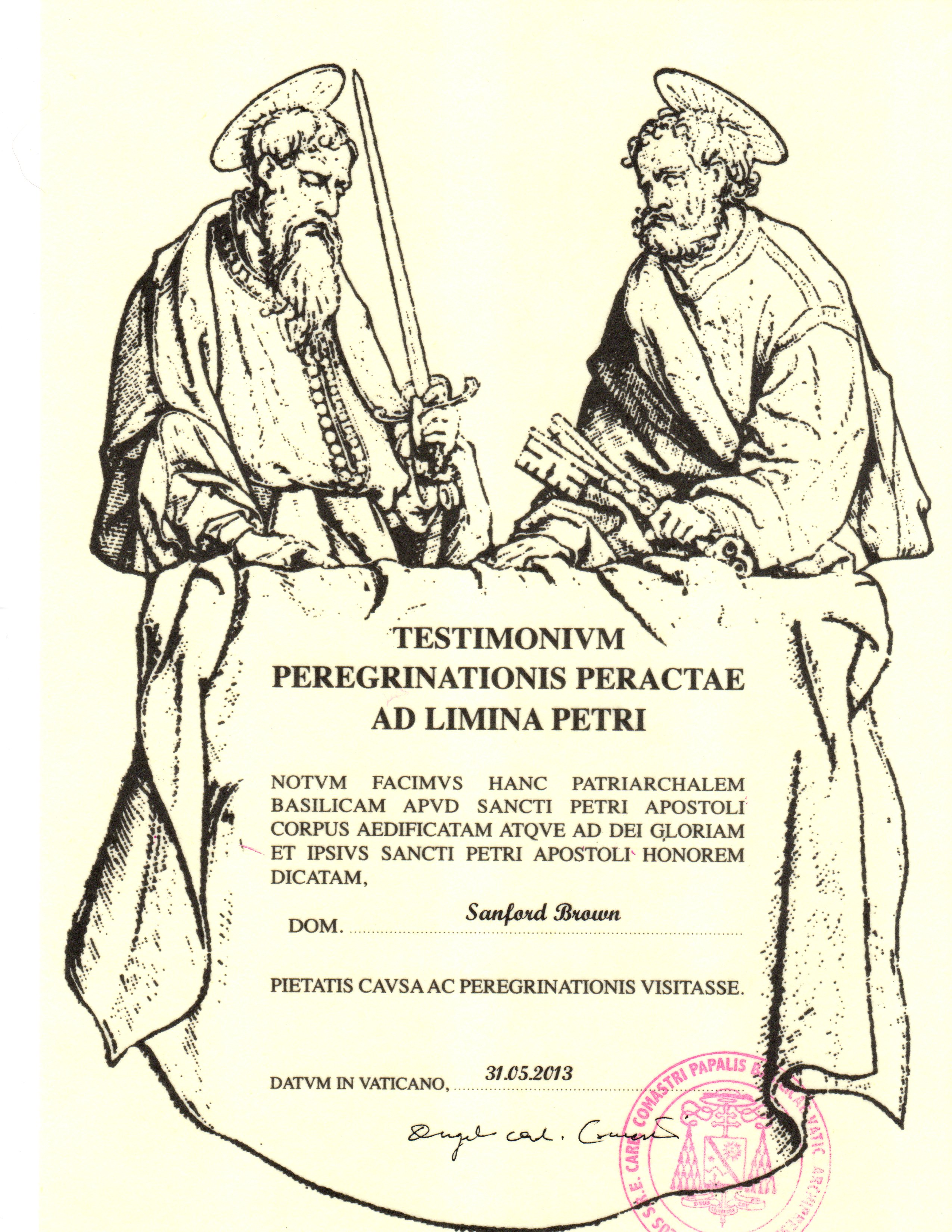
So the next day, Jacqueline and I did just that. After four security checks, including one with the guys in the flashy pantsuits, we arrived at the official pilgrim office. We were asked to have a seat behind a desk and surrender our credentials. In a few moments the kind man returned with stamped Testimonia, tucked into an official Vatican envelope. On our way out we asked how many pilgrims come for their Testimonia each day. Only five to ten, we were told. No wonder no one seemed to know where to direct us.

In spite of the difficulty in finding our way to the right office, it was still fun to see “behind the scenes” at the Vatican during our little foray into this tiny city-state. It’s been a month and no sign of any duplicate Testimonia in the mail, so I’m glad we took the extra time and asked around a little more so we did finally get our certificates.

IMG_2525

We did it! Jacqueline and I succeed in securing our Testimonia, proof that we walked the walk! The Vatican office is just behind us.

Testimonium from the Vatican following our 2013 Cammino di San Francesco

Testimonium from the Vatican following our 2013 Cammino di San Francesco.

Favorite Albergues on the Camino Frances

A request from IrishGurrl on our camino Internet forum led me to do some thinking about my favorite albergues on the Camino Frances. After several tries I came to discover the 10,000 character limit on the Forum wouldn’t allow my 29,000 character response. So I’m posting this here so that it might be of some use to future pilgrims. The links go to the helpful Consumer Eroski camino site (in Spanish). My comments are in red.

Stage 1: S. Jean Pied de Port – Roncesvalles

  • L’Esprit du Chemin. Saint-Jean-Pied-de-Port Many choose to stay here as they take reservations and are right in the thick of things on Rue de la Citadelle in “old” SJPP
  • Refuge Orisson. Uhart-Cize This is a nice albergue, but at just 10 km outside SJPP is mostly used by those who don’t want to walk the whole way to Roncesvalles. It’s the only place to stop for a late breakfast or early lunch on the Route Napoleon, so everyone comes to know it anyway.
  • Albergue de peregrinos de Roncesvalles. Roncesvalles (Navarra2008, 2012 — this is the monastery’s albergue, which has been greatly expanded and is now one of the finest albergues around. It’s in 2-3 stories, with semi-private double rooms in the top story and modern bathroom facilities. Most everyone stays here, though there are two hotels in Roncesvalles now as well.

Stage 2: Roncesvalles – Zubiri

  • Albergue El Palo de Avellano. Zubiri I stayed here in 2011 and found it to be a nice, private albergue, though as I recall a little more expensive than the others. It’s also around the corner and on the main (auto) route, so a little harder to find. They have a nice common meal in the evenings and modern facilities, plus computer access.

Stage 3: Zubiri – Pamplona/Iruña

  • Albergue de Larrasoaña. Larrasoaña (NavarraStayed here in 2008. A primitive, simple albergue with an annex across the street. Dormitories are blessedly small (5-6 people). Very basic. Hand laundry sink in the back yard.
  • Albergue de Jesús y María. Pamplona (NavarraIf I’m thinking of the right one, I know people who stayed here in 2011. In an historic building in the heart of Pamplona. Renovated, but with an open concept that means sound carries all throughout the building (= noisy). But a nice place.

Stage 4: Pamplona/Iruña – Puente la Reina/Gares

Stage 5: Puente la Reina/Gares – Estella/Lizarra

  • Albergue Maralotx de Cirauqui. Cirauqui (Navarra) I love this little albergue and stayed here in 2008 and 2011. The hostess/owner is quite nice, has lots of good advice, and has a restaurant below the albergue with menu del peregrino and large tables that help create good pilgrim conversation. The upper porch is good for clothes washing and hanging out with pilgrims and the views from the south facing windows are gorgeous.
  • Hospital de Peregrinos de Estella. Estella (Navarra) Stayed in a nice hotel in Estella in 2011.

Stage 6: Estella/Lizarra – Torres del Río

Stage 7: Torres del Río – Logroño

Stage 8: Logroño – Nájera

  • Albergue de Peregrinos de Navarrete. Navarrete (La RiojaThis is Navarette’s municipal albergue, which is 2-3 floors in an older, but renovated building. Cots in large dorm rooms. There was a long line of pilgrims waiting for beds when I arrived here in 2011 and I regret the pilgrims shoved their way into the hospitaleros’ office all hoping to be first. Don’t remember a kitchen here.
  • Albergue de Peregrinos de Nájera. Nájera (La RiojaThis is a notorious albergue due to its single, very large dormitory of 100 +/- beds. Location is great, but a dormitory of that size is automatically a little grim.

Stage 9: Nájera – Sto. Domingo de la Calzada

Stage 10: Sto. Domingo de la Calzada – Belorado

Stage 11: Belorado – Agés

Stage 12: Agés – Burgos

  • Albergue El Peregrino. Atapuerca (Burgos) Nice, grassy lawn right on the main (and quiet) road in Atapuerca. Stayed here in 2011. Dormitories in sort of pre-fab buildings, but modernish. Not a bad place. Sunny.
  • Albergue La Hutte. Atapuerca (Burgos) Stayed here in 2008 and just about froze. Fortunately they provided thick quilts since there was no heat. Adjacent restaurant. A few blocks off the camino and a little more simple than my taste, unless it’s been upgraded in the last 5 years.
  • Albergue Municipal de Burgos. Burgos Great location in removated historic building. I always stay at the Meson del Cid very near here, but have heard good reviews of this albergue.

Stage 13: Burgos – Hontanas

Stage 14: Hontanas – Boadilla del Camino

  • Hospital de Peregrinos de San Antón. Castrojeriz (3,6 km antes) This place is in the ruins of the medieval pilgrim hospital and a hauntingly interesting place to stay. I’ve walked through it and found it a little “rough” for my taste, but it would be an amazing memory for those willing to brave the lack of services.
  • Albergue de Castrojeriz (El Camping). Castrojeriz Just as you come into town. Looks like a campground, but also is an albergue. About 1 km from the restaurants and services of Castrojeriz. I opted not to stay here in 2011, but then found the town’s other albergues full.
  • Albergue de San Nicolás. Itero del Castillo (BurgosI love this albergue. Stay here if you can get in! Only 12ish beds, I think. The Italian volunteers who run it cook a simple, communal meal and then have a footwashing ceremony. A very memorable stay!

Stage 15: Boadilla del Camino – Carrion de los Condes

  • Albergue de Frómista. Frómista (Palencia) Right in the heart of Fromista. Stayed here in 2008. At first was told it was full, then finally the hospitalera opened an overflow room. Not sure why I wasn’t offered a bed right away. Hand laundry and clotheslines. No kitchen that I can remember, but ample restaurants immediately adjacent. Just across from Fromista’s famous church.
  • Albergue Villalcázar de Sirga. Villalcázar de Sirga (Palencia) Stayed here in 2011 and enjoyed it just fine. The albergue is quite simple and there are few services in this tiny town. However, the altar pieces in the church are just amazing and well worth the 1 Euro cost of entry. These would be prized pieces in any museum in the world.

Stage 16: Carrión de los Condes – Terradillos de los Templarios

Stage 17: Terradillos de los Templarios – El Burgo Ranero

Stage 18: El Burgo Ranero – León

Stage 19: León – San Martín del Camino

Stage 20: San Martín del Camino – Astorga

  • Refugio Parroquial Hospital de Órbigo. Hospital de Órbigo (León) A little odd to find a big mural of the Alps here, but there’s an Alpine feeling to this albergue. Nice grassy lawn in the back. Two floors of rambling rooms in the front and single floor annex in the back. Bathrooms are oddly placed around the inner courtyard. The archetypal albergue. Stayed here 2008 and 2011.

Stage 21: Astorga – Foncebadón

  • Albergue de Murias de Rechivaldo. Murias de Rechivaldo (LeónFriends stayed here 2011. Very simple, basic albergue on the main road (off the camino a couple of blocks)
  • Albergue Casa Las Águedas. Murias de Rechivaldo (LeónRight on the camino. A private albergue with mid-sized dormitories, washer/dryer, snacks, restaurant. Competent private albergue. Stayed here 2011. Would stay here again.
  • Albergue Gaucelmo. Rabanal del Camino (LeónThis is the albergue of the Confraternity of St. James and is well-loved by pilgrims who stay here. Stayed here 2008 and found the British hospitaleros to be the very best. Basic, simple, perfect albergue. Don’t remember the kitchen, but ate a lovely meal across the street. Adjacent to the monastery that has nightly Vespers at 7:00.
  • Albergue parroquial Domus Dei. Foncebadón Stayed here in 2011 and enjoyed the Bavarian hospitaleros. The overflow room (which doubles as a chapel) is ice cold at night. Communal meal cooked by pilgrims with chapel service. Good (but cold) memories here. (Remember, Foncebadon is nearly at the top of the mountains)

Stage 22: Foncebadón – Ponferrada

Stage 23: Ponferrada – Villafranca del Bierzo

Stage 24: Villafranca del Bierzo – O Cebreiro

Stage 25: O Cebreiro – Triacastela

Stage 26: Triacastela – Sarria

  • Albergue del Monasterio de Samos. Samos (LugoThis is a very simple albergue in the basement of the monastery, accessed from the main street by the monastery’s gas station. One large dormitory with murals on the walls and bunk beds. Coed bathroom. Get there early to get hot water. It’s simple, but I like this place mostly for the Vespers at the monastery each evening and the beautiful monastery tour in the afternoon.

Stage 27: Sarria – Portomarín

  • Albergue Mercadoiro. Mercadoiro (Lugo) Nice, grassy lawn. Stayed here in 2011 and enjoyed a meal in the restaurant of the albergue. Rambling building with small rooms and modernish bathrooms. Would stay here again.

Stage 28: Portomarín – Palas de Rei

  • Albergue Buen Camino. Palas de Rei (Lugo) I believe I stayed here in 2011, though the names of the various PdR albergues are a little confusing. If I’m remembering this correctly the albergue is a rabbit warren above the second floor. The Fire Dept would go crazy here as it’s easy to get lost in the little rooms and alcoves.

Stage 29: Palas de Rei – Arzúa

  • Albergue Ultreia. Arzúa I believe I stayed here in 2012. Also has a hostel, if I’m correct. Nice place.
  • Albergue Vía Lactea. Arzúa Stayed here in 2011. Room was sort of mildewy, but the kitchen and bathrooms worked out nicely. Sort of an outdoor shower. Dining room oddly placed in the front, far from the kitchen. A block or two off the camino, but a competent albergue.

Stage 30: Arzúa – Pedrouzo 

I always bite the bullet and walk directly from Arzua to Santiago, so I’ve never tried any of the remaining albergues (I stay in the Altair Hotel in Santiago as a plush and comfy retreat after a long camino).

Stage 31: Pedrouzo – Santiago de Compostela